



















美伊冲突持续近月,战火仍在波斯湾蔓延不息。自2026年2月28日冲突升级以来,霍尔木兹海峡这一全球原油运输的“咽喉”已近乎停摆,国际油价随之剧烈震荡。如果局势持续恶化,油价是否会复刻2008年的疯狂,突破每桶147美元的历史极限?
As the US-Iran conflict has been raging for nearly a month, the flames of war continue to burn across the Persian Gulf. Since the escalation began on February 28, 2026, the Strait of Hormuz—a vital "chokepoint" for global crude oil transport—has come to a near standstill, triggering sharp volatility in international oil prices. Should the situation deteriorate further, will oil prices replicate the frenzy of 2008 and break through the historic ceiling of $147 per barrel?
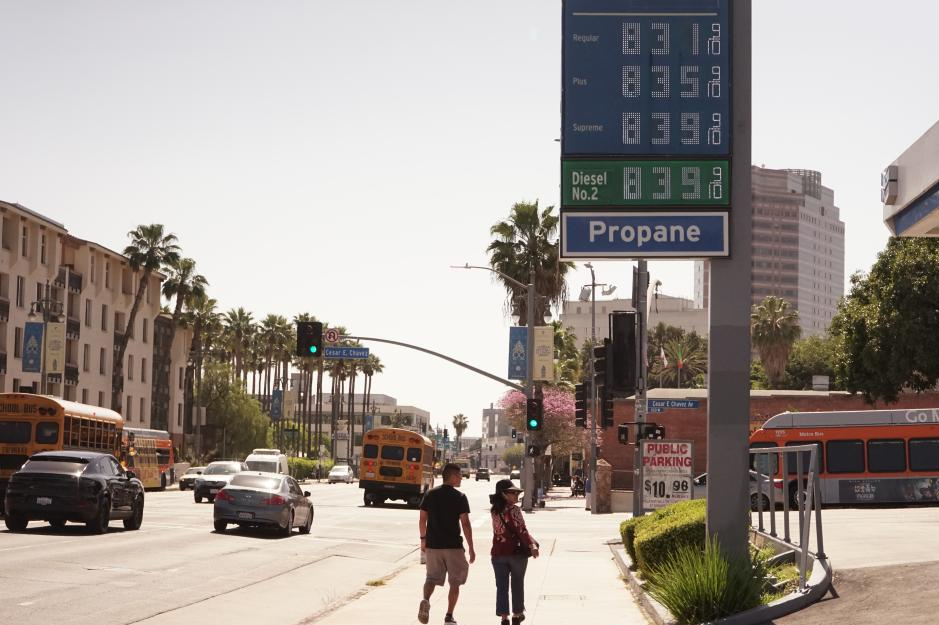
3月9日,美国加利福尼亚州洛杉矶县加油站的油价牌(图源:新华社)
四川国际传播中心邀请到西南交通大学公共管理学院教授陈光,为我们剖析这场能源危机的底层逻辑与未来走向,全文如下:
Sichuan International Communication Center has invited Professor Chen Guang from the School of Public Administration at Southwest Jiaotong University to analyze the underlying logic and future trajectory of this energy crisis. The full text is as follows:
“美伊冲突”是2008年以来油价波动、1970年以来能源危机2.0版的重大事件。自2月28日美伊冲突爆发以来,油价进入短期急涨、中期高位震荡、长期极度不确定的基本走势。从战前原油约在70-73美元/桶区间,一度飙升触及110-114美元/桶高点,部分时段接近120美元/桶。国内油价3月9日、3月23日两次调涨,是近四年以来的最大涨幅。美方宣布延迟5天袭击伊朗石油设施,事态极具“戏剧性”和“不确定性”。未来时点,国际油价是否会突破2008年的147美元/桶历史高点?届时我们该如何应对?
The U.S.-Iran conflict has triggered another round of dramatic oil price fluctuation, to levels unseen since 2008, marking the most escalated energy crisis since the 1970s. Following the outbreak of the U.S.-Iran conflict on February 28, oil prices have exhibited the following primary trends: spikes in a short run, sustained volatility at a higher level in the medium term, and extreme uncertainty over the longer term. Oil prices soared from the pre-war range of USD 70-73 per barrel to USD 110-114 per barrel, touching nearly USD 120 in some periods. Domestic oil prices saw two hikes on March 9 and 23, representing the biggest increases in the past four years. The U.S. announced a five-day delay in its planned attack on Iran’s oil infrastructure, injecting a high degree of drama and uncertainty into the situation. In the coming days, will international oil prices surpass the 2008 record high of USD 147 per barrel? And if so, what measures can be taken in response?
截至3月24日,综合近一个月的战争、霍尔木兹海峡(以下简称“海峡”)通行情况、基础设施破损、谈判博弈、需求(投机)刺激等各种因素分析研判,4月底以前,以下三种情况的出现都有可能。
As of March 24, a comprehensive analysis of key factors over the past month, including the ongoing conflict, traffic conditions in the Strait of Hormuz (hereinafter referred to as “the Strait”), infrastructure damage, diplomatic negotiations, and speculative demand pressures, points to three possible scenarios by the end of April:
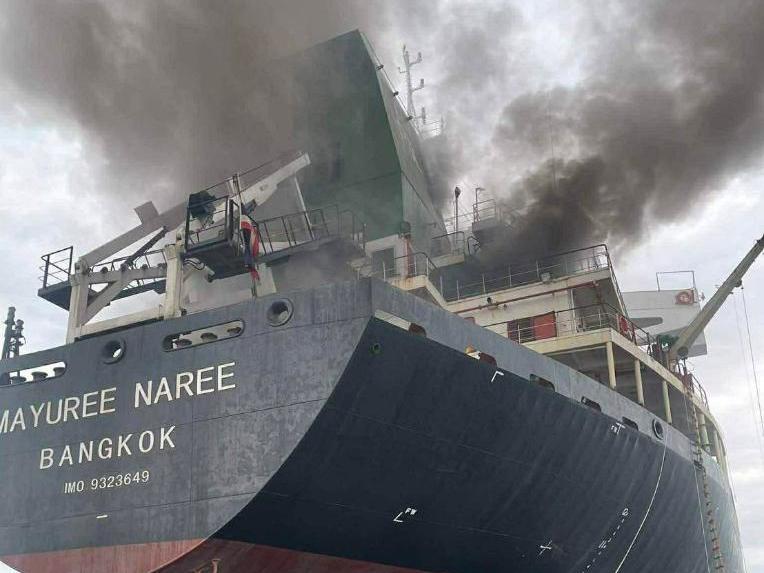
一艘泰国货船在霍尔木兹海峡海域遭袭起火(图源:新华社)
一是最乐观结果(概率25%—40%)。美伊若能在近期开启实质性谈判并取得进展、快速和解。美国国内压力促成谈判,伊朗在坚持原则立场的同时,妥协让步协调通行霍尔木兹海峡、储备原油释放,为谈判争取时间。海峡1-2周内重开大部分流量,大于50%流量恢复。国际油价预期回落至80-90美元/桶。国内油价从高位回落。
First, the most optimistic scenario, with a probability of 25–40%: The U.S. and Iran engage in substantive negotiations in the near term and manage to achieve tangible progress and a swift resolution. Driven by domestic pressure, the U.S. would push for a deal; Iran, while remaining steadfast in its core principles, would make compromises to facilitate the resumption of shipping and the release of oil reserves to buy time for further negotiations. Consequently, the Strait would re-open to most ships within 1-2 weeks, with more than 50% of traffic restored; international oil prices would fall back to USD 80–90 per barrel; and domestic oil prices would retreat from current highs.
二是持续管控、部分通行(概率40%—55%)。伊朗维持“非敌对船只协调通过”政策,海峡日通行5—20艘。双方极限施压但避免全面战争升级、国际能源署(IEA)继续释放储备以平抑油价。国际油价维持在90-120美元区间高位震荡、徘徊,受消息面影响波动明显,市场情绪整体压抑,难破147美元/桶历史高点。
Second, continued restrictions with partial passage allowed, with a probability of 40–55%: Iran enforces the policy that “only non-hostile vessels may transit the Strait after coordination with Iranian authorities”. Under this policy, 5 to 20 vessels pass through daily. The U.S. and Iran would impose maximum pressure on each other but avoid escalation into full-scale war, while the International Energy Agency (IEA) would continue to release reserves to stabilize oil prices. These attempts will keep international oil prices range-bound at elevated levels of USD 90-120 per barrel, though prices would fluctuate significantly with news developments. Overall market sentiment would remain subdued, making it difficult to break through the 2008 historical high of USD 147 per barrel.
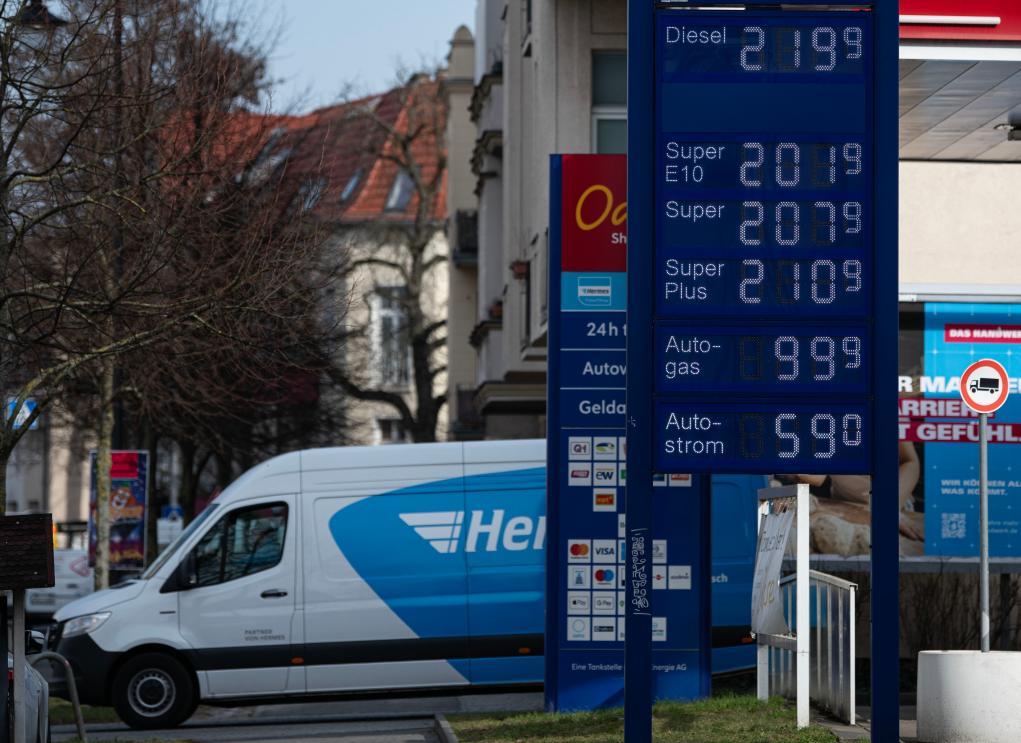
3月9日,在德国首都柏林,一辆货车驶出加油站(图源:新华社)
三是悲观升级(概率20%—35%)。海峡若完全关闭,产生连锁破坏。美以若威胁打击伊朗发电厂、能源,伊朗将全面封锁海峡,报复海湾设施。受冲突影响,国际油价短期内飙升,峰值将突破147美元/桶。如果中短期危机进一步演变为多国加入的战争,冲突扩大(概率5%—15%),海峡长期(数月至一年)关闭,国际油价可能持续高位运行,峰值存在超过200美元/桶的风险情景。这可能引发全球滞胀风险。
Third, a pessimistic escalation, with a probability of 20–35%: The Strait is completely closed, triggering a chain reaction of attacks. In the event that the U.S. and Israel threaten to strike Iran’s power plants and energy infrastructure, Iran would impose a total blockade of the Strait and launch retaliatory strikes against facilities along the Persian Gulf. Fueled by the conflict, international oil prices would surge in the short term, peaking above USD 147 per barrel. If the short-to-medium-term crisis further escalates into a multi-country war (probability: 5–15%), it would lead to an extended closure period of the Strait lasting months or even up to a year. Moreover, international oil prices would experience sustained volatility at high levels, with the risk of surpassing USD 200 per barrel. This could risk setting off global stagflation.
历史经验告诉我们,能源危机往往都在供给变量(战争、航道中断、能源设施受袭、地缘博弈等)、需求变量(技术进步、产业结构调整、生产方式变革、居民消费模式变化等)以及错综复杂地缘政治角逐中产生。其中既有大致确定的经济周期,更有难以预料的突发事件。
Historical experience has shown that energy crises typically stem from a mix of supply-side factors (such as wars, disruptions to shipping lanes, attacks on energy infrastructure, and geopolitical rivalries), demand-side factors (such as technological advancements, industrial restructuring, changes in production methods, and shifts in consumer behavior), and complex geopolitical rivalries. These crises are driven not only by largely predictable economic cycles but also by unforeseeable emergencies.
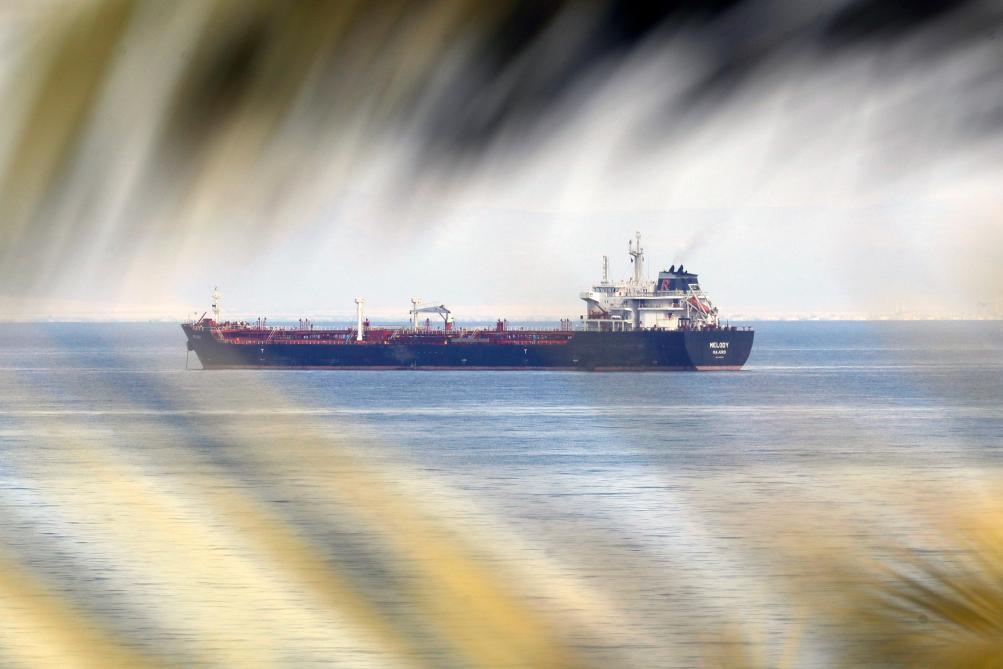
3月11日,油轮在靠近埃及苏伊士运河入口处的红海海域行驶(图源:新华社)
最大的确定性,在于未来始终存在的不确定性。而真正具有操作意义上的确定性,在于一国能否在外部冲击面前保持战略定力,持续夯实实体经济基础,稳步推进能源结构优化与绿色产业发展,并研究建立针对能源供应紧张等极端情境下的企业与家庭应急补贴机制。市场信心的维系、企业预期的稳定、基本民生的兜底,共同构成了应对外部能源危机最为坚实的内在支撑。
What is certain is that uncertainty will always persist. However, the true certainty in action boils down to a nation’s ability to maintain strategic focus in the face of external shocks, continuously strengthen the foundation of its real economy, steadily advance the optimization of its energy landscape and the development of green industries, and establish emergency subsidy mechanisms for businesses and households to cope with extreme scenarios such as energy supply shortages. Maintaining market confidence, stabilizing corporate expectations, and ensuring a safety net for basic livelihoods form the most solid internal foundation for weathering external energy crises.

陈光
西南交通大学公共管理学院教授,兼任四川省委省政府决策咨询委员会委员、国际科技管理学会(AIMOT)会员、国际行政学会中国专家委员会委员、中国科学学与科技政策研究会常务理事等职。
Chen Guang
Professor, School of Public Administration, Southwest Jiaotong University
已获得本文转载及翻译授权
Reproduction and translation rights have been obtained.
【未经授权,严禁转载!联系电话028-86968276】