


















Lai Wenguang: Sparking a global passion for Sichuan cuisine
文:《一带一路报道》全媒体记者 雷露

川菜的国际粉丝越来越多,离不开身体力行的川菜文化推广者。他们秉承川菜烹饪理念,坚守“一菜一格,百菜百味”的川菜本质,向世界推介鲜香麻辣的正宗川菜。赖文光就是其中一位,他是新加坡老四川连锁餐厅的创办人,凭借辣子鸡、泡椒田鸡、水煮肉片等拿手好菜,引得新加坡的好吃嘴儿们拍手称赞,为川味美食香飘海外写下了生动注脚。
回顾与川菜打交道的30年,赖文光满是感慨:“川菜有百味,爱上川菜是一件很容易的事!”现在,为了让更多人爱上川菜,他以“向世界推广川菜”为己任,开启了人生新征程。
走出县城,在成都与川菜结缘
“我能干什么?”
曾经,赖文光和无数青葱懵懂的少年一样,问过自己这样一个问题。彼时,他只能从周围人身上找寻答案,迷茫之中,做厨师的舅舅成了赖文光想要追逐的那道光。可是舅舅却泼下一盆凉水:“做餐饮,起早贪黑、忙碌辛苦,不适合你。”
面对亲人的不看好,赖文光暗自较着劲儿,“别人能做的事,我一样也能做”。就这样,他选择离开家乡德阳中江县,只身来到成都的一所烹饪学校学习厨艺。
随着改革开放的春风拂过神州大地,地处中国西南腹地的成都迎来了飞速发展,这里不仅是四川省的省会,也是全省的政治、经济、文化中心。
在年少赖文光的心里,成都意味着“无限机遇”,以至于他至今仍记得当年“闯成都”的初心——学做正宗川菜,在成都闯出一片天地。
初心不仅被他牢记在心里,也被付诸实践。
川菜是中国八大菜系之一,以独特的麻辣口感刺激着无数食客的味蕾,素有“一菜一格,百菜百味”的美誉,也正因如此,学习烹饪川菜格外艰难,从食材选择到调料配比再到火候掌握,“差之毫厘”便会“谬之千里”。
为了学习正宗川菜做法,赖文光在烹饪学校不怕苦、不怕累,一心扑在厨房里、灶台上。从最基础的杂工做起,然后是刀工、打荷直至掌勺,每一个环节他都学得格外认真。这段求学经历,以两年后赖文光顺利进入成都一家知名大酒楼做学徒告一段落。
“在酒楼做学徒,除了做好本职工作外,就是要多看、多学、多琢磨。”后来,赖文光又辗转多家酒楼、饭店,一边学习烹饪技术,一边积累工作经验。丰富的学徒经历,不仅让他掌握了过硬的川菜烹饪技巧,也使他对烹饪广东菜、傣族菜颇有钻研。
博众家之所长,为赖文光日后走出国门埋下了伏笔。
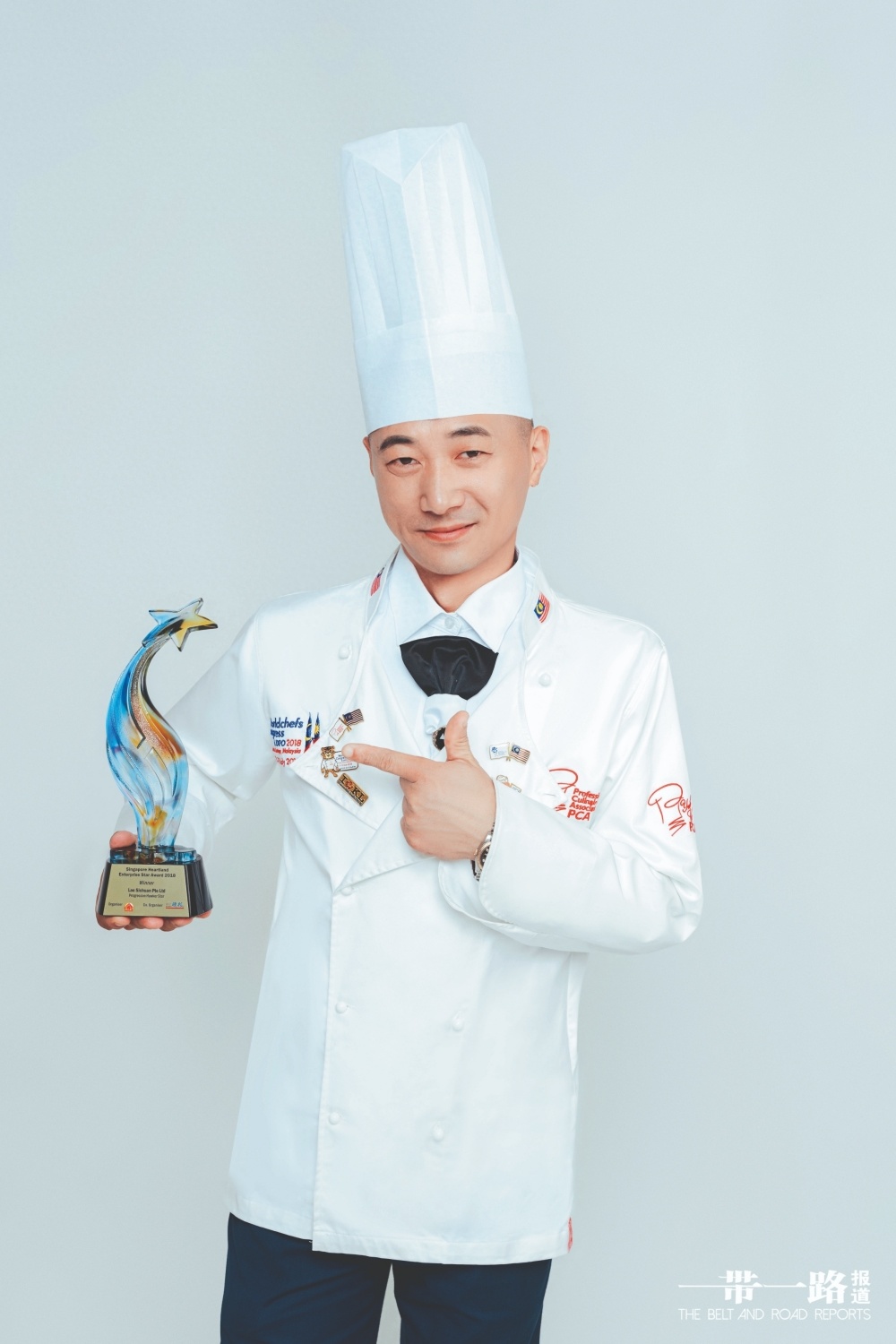
赖文光
破圈出海,赴新加坡做正宗川菜
那是2002年的一天,赖文光像往常一样按部就班地在后厨忙碌着,一位客人突然找来并询问他:“是否愿意去新加坡当厨师?”
这是一位来自新加坡的食客,自品尝过赖文光烹饪的食物后,便对他的厨艺赞不绝口,十分希望将正宗的川菜带到新加坡。
出国当厨师!历经过20世纪90年代的“出国热潮”,赖文光与无数年轻人一样,渴望去闯荡更大的世界。所以,当机会摆在面前时,他牢牢把握住了。在这位食客的倾力引荐下,赖文光凭借一身过硬的厨艺,成功入职新加坡的一家中餐厅,并担任主厨。
面对崭新的环境,赖文光沉下心去做川菜,征服了口味挑剔的外国食客,其中不仅有新加坡本地人,还有印尼、泰国、马来西亚等国家的人,甚至欧洲人。在异国他乡,赖文光成功打响了正宗川菜的名号。
2007年6月,第一间属于赖文光自己的餐厅——蜀香阁,在新加坡与大众见面。由于前期打下的好口碑,仅100平方米的餐厅时常高朋满座,只为一尝鲜香麻辣的地道川菜。
“要做川菜品牌的海外推广者。”在海外打拼的时间越久,赖文光对川菜的认识就越深刻,身份也从单纯的厨师向着川菜文化推广大使转变。两年后,当餐厅经营步入正轨,他毅然注册了“新加坡老四川连锁餐厅”商标,“有了商标,做了品牌,形成自己的川菜符号,才能更好地推广川菜。”赖文光说。
为了更好地推广川菜、服务来店就餐的食客,闲暇之余,赖文光便会与客人聊天,了解他们的口感偏好,以便创新推出更符合当地人口味的川味美食。其中,辣子鸡就是根据食客亲身感受,在保留川菜地道风味的基础上,进行改良的一道菜。
创业初期,赖文光在制作辣子鸡时,从挑选仔鸡原料到使用辣椒、花椒等调味品,都尽可能地复刻“四川模式”,竭尽全力保留川菜的原汁原味。不出所料,经过精心烹饪的辣子鸡吃起来外酥里嫩、干香爽口,备受食客好评,成了店里的必点招牌菜。但后来发生的一个小插曲,让赖文光不得不对这道必点菜进行改良。
引发小插曲的是一名新加坡人,他在吃了带骨头的鸡丁肉后,突发腹部疼痛,送医院治疗后才知道,原来新加坡人的饮食结构和中国人不一样,吃惯了精细食物的他们吃带骨的食物,尖锐的骨头容易划伤口腔和肠道。
为了食客的安全健康,赖文光决定从源头杜绝风险,将带骨鸡肉全部替换成鸡胸肉,但烹饪方法和调味佐料的搭配保持不变。经过调整,辣子鸡这道原本就颇受欢迎的川菜,真正成了当地人的“心头好”,“哪怕排队两小时,也要吃上一口。”当地食客这样说道。
重新出发,让世界爱上川菜
在新加坡打拼20余年,令赖文光感到开心的是,不仅新加坡的普通民众认可他的川味美食,不少名人明星也寻香而来,就连新加坡总理李显龙也曾携家人到餐厅用过餐。
“一开始我不知道发生了什么,当员工说总理来店里用餐后,我非常高兴。”忆起李显龙低调到餐厅用餐的情况,赖文光直言“很奇妙”。
其实,喜欢川菜的何止李显龙。英国前首相卡梅伦访华时,曾走进成都街头的火锅店,体验了一把火锅的热辣;德国原总理默克尔因为爱吃宫保鸡丁,访华时亲自到菜市场购买食材学做川菜;法国前总统希拉克因为喜欢吃川菜,甚至还高薪聘请了中国厨师……
民族的就是世界的。随着“一带一路”倡议在世界范围内不断深入推进,作为中国八大菜系之一的川菜,在世界上有着越来越多的拥趸,这给新加坡“老四川”这样的川菜馆带来了更多发展机遇。
“因为我们始终坚持川菜本味,所以吸引来的都是最忠实的食客。”面对大量的好吃嘴儿们,赖文光做正宗川菜的初心不改。一家、两家、三家……最多的时候,新加坡老四川连锁餐厅开有8家连锁店,主厨大多都是从国内高薪聘请的资深川菜厨师,员工则聘用当地人,在大家的齐心协力下,“新加坡老四川”发展势头一片红火。
后来受全球疫情影响,8家连锁店缩减至4家。如今,随着疫情的阴霾逐渐消散,赖文光又有了“扩张”的心思。目前,他正在考察印度尼西亚、马来西亚、泰国等地的餐饮市场,为重新出发做准备。
值得庆幸的是,在为“川菜出海”摇旗呐喊的路上,赖文光始终不是一个人。
据2022年11月发布的《川菜产业可持续发展报告2022》显示,目前已有100余家川菜企业先后走出国门,赴海外开店,多达75个国家和地区有川籍外派厨师。
在今年4月开展的“中华川菜·世界品味”全球形象体验店评选中,老房子餐饮葡萄牙里斯本店等7家海外中餐馆被授予首批“中华川菜·世界品味”全球形象体验店称号,为川菜文化海外推广、川菜产业国际合作和四川国际形象展示添砖加瓦。
对此,赖文光颇有感触,他认为推广川菜不是个人的单打独斗,需要更多的政府机构、社会组织加入进来,从政策支持、平台搭建、标准制定等方面对川菜进行全面发展。当下,随着“一带一路”倡议在世界范围内走深走实,参与共建“一带一路”的国家、企业、个人越来越多,赖文光相信川菜在海外的生命力会越来越强。
“要以川菜为媒,在海外打造百年川菜品牌店。”从县城到成都再到新加坡,30年的从业经历,让赖文光多了一份淡定从容。他说,要向世界推广川菜,也要向世界讲述川菜故事、传递川菜文化,让更多人了解川菜、爱上川菜。
The increasing popularity of Sichuan cuisine among international food enthusiasts cannot be dissociated from the diligent efforts of those championing Sichuan cuisine culture. They carry forward the philosophy of Sichuan cuisine, maintaining the quintessential principle of “one dish, one style and flavor.” They are dedicated to promoting the vibrant, aromatic, and spicy characteristics of authentic Sichuan cuisine to the global arena. Lai Wenguang is one of these Sichuan cuisine enthusiasts. As the founder of the Old Sichuan restaurant chain in Singapore, his establishment offers an array of delectable dishes like stir-fried spicy chicken, boiled frog with preserved chili, poached spicy pork slices, and many more. His restaurant has earned high praise from discerning Singaporean food enthusiasts and has played a crucial role in expanding the global footprint of Sichuan cuisine’s distinctive flavors.
Reflecting upon his 30 years of experience with Sichuan cuisine, Lai Wenguang is brimming with sentiment. He said, “Sichuan cuisine encompasses a myriad of flavors, which makes it quite effortless to fall in love with it.” He considers it his mission to increase the appreciation for Sichuan cuisine worldwide. As such, he is embarking on a new journey in his life, dedicated to the international promotion of this exquisite culinary tradition.
Originally from a county town, Lai Wenguang became attached to Sichuan Cuisine in Chengdu
“What can I do?”
Lai Wenguang asked himself, much like many other naive and inexperienced teenagers of his time. During that period, his only source of answers were the people around him. Amid his uncertainty, his uncle, who was a chef by profession, emerged as a beacon of hope that Lai Wenguang aspired to follow. His uncle tried to dissuade him, saying, “A caterer rises at the crack of dawn and labors throughout the day. This profession is not a suitable match for you.”
Despite his family’s objections, Lai Wenguang held a different belief, “If others can do something, so can I.” With this idea in mind, he bade farewell to his birthplace, Zhongjiang in Deyang, and went on a journey alone to Chengdu to hone his culinary skills at a cooking school.
Thanks to the implementation of the reform and opening up policy across China, the southwestern city of Chengdu, capital of Sichuan Province and its provincial hub for politics, economics, and culture, entered a period of accelerated growth.
For the youthful Lai Wenguang, Chengdu appeared to brim with “limitless opportunities.” His decision to move to Chengdu was fueled by his aspiration to master the art of authentic Sichuan cuisine and establish a successful career in this city, a memory that continues to resonate with him.
He held onto his original aspiration, and diligently turned it into reality.
Sichuan cuisine, one of the eminent eight culinary traditions of China, is renowned for its distinct spicy flavor that ceaselessly tantalizes the palates of countless epicureans. It is celebrated for its remarkable diversity in taste and flavor profile, making the mastery of Sichuan cuisine a highly challenging endeavor. Every aspect of the preparation process, from the selection of the right ingredients to the precise blending of seasonings and the meticulous timing of heat application, must be executed with utmost precision to prevent significant errors.
To master the art of authentic Sichuan cuisine, Lai Wenguang learned relentlessly at the cooking station within the culinary school’s kitchen. He began his career as a handyman, then diligently acquired skills in cutting, food serving coordination, and other culinary proficiencies essential to becoming a chef. He demonstrated remarkable conscientiousness at every stage of his progression. This educational journey culminated in Lai Wenguang securing a prestigious apprenticeship at a renowned restaurant in Chengdu, two years later.
“As an apprentice in a restaurant, one must understand that aside from performing one’s duties, the role also involves keen observation, continuous learning, and thoughtful reflection.” Lai Wenguang later worked in a number of other restaurants and hotels, where he honed his culinary skills and amassed significant professional experience. His extensive apprenticeship experience not only allowed him to master the fine art of Sichuan cuisine, but also endowed him with a profound knowledge of Cantonese and Dai culinary traditions.
His assimilation of the strengths of various culinary traditions established a solid foundation for his worldwide business ventures.
Overseas expansion: Implementing authentic Sichuan Cuisine in Singapore
One day in 2002, Lai Wenguang was diligently performing his duties in the kitchen of a restaurant, as was his daily routine. Out of the blue, a customer approached him with an unexpected proposition: “Would you consider working as a chef in Singapore?”
The customer, a gastronomy enthusiast from Singapore, was effusive in his praise for Lai Wenguang’s extraordinary culinary skills after tasting his dishes. He fervently expressed his desire for Lai Wenguang to bring the true flavors of Sichuan cuisine to Singapore.
This is how Lai Wenguang became a chef in Singapore! Lai Wenguang was acutely aware of the intense desire among individuals from the 1990s to venture overseas. Like numerous other young people of his time, he harbored a deep longing to explore the vast expanse of the world beyond his immediate surroundings. Thus, he seized the presented opportunity with both hands. With exceptional culinary abilities, Lai Wenguang join a Chinese restaurant in Singapore as the head chef at the recommendation of this diner.
Lai Wenguang immersed himself in Sichuan cuisine in his new surroundings. His culinary creations garnered acclaim from discerning diners from Singapore, Indonesia, Thailand, Malaysia, and even Europe. He successfully established a reputation for authentic Sichuan cuisine in a foreign country.
In June 2007, Pavilion of Sichuan Aroma, a restaurant genuinely owned by Lai Wenguang, was inaugurated in Singapore. His good reputation significantly contributed to the success of the new 100 square meter restaurant, which consistently draws in crowds eager to savor the fresh, fragrant, and spicy authentic Sichuan cuisine.
In a dedicated effort to enhance the promotion of Sichuan cuisine and serve his restaurant customers more effectively, Lai Wenguang often takes the time to personally engage in meaningful conversations with his guests. By doing so, he gains a deep understanding of their culinary preferences. As a result, he is able to innovatively introduce Sichuan dishes that are tailored to accommodate the local taste. The stir-fried spicy chicken is one of the dishes that has been enhanced considering his patrons’ personal experiences, yet it maintains the authentic flavor of traditional Sichuan cuisine.
In the early stages of his enterprise, Lai Wenguang meticulously emulated the “Sichuan model” to retain the authentic essence of Sichuan cuisine in his preparation of stir-fried spicy chicken. The choice of chicken, along with the application of chili, pepper, and other seasonings, were all conducted with stringent adherence to exacting standards. As one might expect, the perfectly prepared spicy chicken has a crispy exterior and a tender interior. Its aromatic and robust flavor garnered high praise from diners, establishing it as the restaurant’s signature dish that is simply a must-order. However, a subsequent hiccup compelled Lai Wenguang to enhance this signature dish.
The hiccup involved a Singaporean who suffered abrupt abdominal pain after eating bone-in chicken. The individual was promptly admitted to a hospital for treatment. Subsequently, it was discovered that the dietary habits in Singapore differ significantly from those in China. Singaporeans, accustomed to finely prepared meals, may experience damage to their oral and intestinal tracts if they consume meat with sharp bones embedded within.
In order to guarantee the safety and wellbeing of his customers, Lai Wenguang made the decision to mitigate risk at its origin by substituting all bone-in chicken with chicken breast. This change was implemented without altering the culinary techniques or the method of seasoning blend preparation. After the modifications, the spicy chicken, already a beloved Sichuan delicacy, became the locals’ “top favorite.” “I am willing to sample it, even if it means waiting in line for two hours,” a local diners said.
Embarking a new on a mission to make the world fall in love with Sichuan Cuisine
Having dedicated over two decades to his work in Singapore, Lai Wenguang finds himself fulfilled and delighted. Besides the everyday Singaporeans who appreciate his Sichuan cuisine, many celebrities frequently visit, drawn by the enticing aromas. Among those who have dined at his restaurant is Singaporean Prime Minister Lee Hsien Loong, who once brought his family for a meal.
Indeed, Lee Hsien Loong is not the only individual with a fondness for Sichuan cuisine. During his visit to China, former British Prime Minister David Cameron dined at a hotpot restaurant in Chengdu, thus experiencing the unique flavors of hotpot. Former German Chancellor Angela Merkel, who has an affinity for spicy diced chicken with peanuts, purchased ingredients from a Chinese food market during her visit to China in preparation for the dish she likes. Former French President Jacques Chirac exhibited his profound appreciation for Sichuan cuisine by employing a Chinese chef at an exceptional salary.
What is of national significance also holds global importance. As the Belt and Road Initiative continues to gain momentum globally, Sichuan cuisine, one of the eight definitive culinary traditions of China, is attracting an increasing number of enthusiasts worldwide. This burgeoning interest has subsequently paved the way for enhanced development opportunities for Sichuan restaurants, such as “Old Sichuan” in Singapore.
“Due to our unwavering dedication to preserving the authentic taste of Sichuan cuisine, we have garnered a strong following among devoted diners.” In response to the escalating interest in Sichuan cuisine, Lai Wenguang continues to pursue his commitment to crafting authentic Sichuan dishes, faithfully upholding his original vision. One, Two, Three ... At the pinnacle of its success, the “Old Sichuan” restaurant chain in Singapore had eight establishments. The culinary team was primarily composed of experienced chefs recruited from China, supported by a local workforce. The collaborative effort of the operation team propelled “Old Sichuan Singapore” towards a period of substantial growth and momentum.
Due to the global impact of COVID-19, the eight-store chain was reduced to four outlets. As the shadow of the pandemic starts to fade, Lai Wenguang is now considering “scaling up” his business operations. Currently, he is conducting an in-depth analysis of the restaurant industry in Indonesia, Malaysia, and Thailand in preparation for his business relaunch.
Lai Wenguang is fortunate. His efforts to introduce Sichuan cuisine to international audiences have received widespread support.
According to the “2022 Sustainable Development Report of the Sichuan Cuisine Industry” published in November 2022, over 100 enterprises specializing in Sichuan cuisine have made significant strides in international expansion by establishing outlets overseas. Moreover, up to 75 countries and regions have actively sought and recruited skilled culinarians from Sichuan.
In the ranking event held in April this year for the “Sichuan Cuisine—A Chinese Flavor to the World” Global Image Experience Store, seven international Chinese restaurants were honored, including the Old House Catering Lisbon Store in Portugal. These establishments were recognized as “Sichuan Cuisine—A Chinese Flavor to the World” Global Image Experience Stores. This accolade serves to further promote the rich culture of Sichuan cuisine overseas, foster international collaborations within the Sichuan culinary industry, and enhance Sichuan’s global reputation.
Lai Wenguang has profound insights on this subject. He argues that promoting Sichuan cuisine to a global audience is not a solitary effort. Instead, he insists that the active participation of government agencies and societal organizations is crucial in driving the growth of Sichuan cuisine. In his view, this can be achieved through policy support, the creation of dedicated platforms, and the development of standards. As the Belt and Road Initiative continues to gain traction globally and an increasing number of countries, corporations, and individuals join this shared endeavor, Lai Wenguang is confident that Sichuan cuisine will significantly grow in international markets.
“We aim to establish a Sichuan cuisine brand overseas that will have enduring influence, using the allure of Sichuan cuisine as our primary means.” Lai Wenguang has three decades of industry experience in the catering sector. His entrepreneurial journey began in a small county town, flourished in Chengdu, and eventually expanded overseas to Singapore. This wealth of experience has undoubtedly contributed to his placidity. He said he will promote the international recognition of Sichuan cuisine, recount the stories behind it, and broadcast its rich cultural heritage to foster a more comprehensive understanding and appreciation of it and inspire a greater number of individuals to explore and develop an affinity for it.
来源:《一带一路报道(中英文)》2023年10月特刊
【未经授权,严禁转载!联系电话028-86968276】












川菜的国际粉丝越来越多,离不开身体力行的川菜文化推广者!!
向世界讲述川菜文化,让更多人了解川菜、爱上川菜。
一菜一格,百菜百味!
博众家之所长,为赖文光日后走出国门埋下了伏笔
川菜要地道才更好!
让川菜走出国际。