



















2026年亚太经合组织(APEC)领导人非正式会议正在中国深圳举行。在全球经济格局深刻变化、区域合作面临新挑战的背景下,APEC的未来发展及中国在其中的角色备受关注。四川国际传播中心获中国人民大学重阳金融研究院授权,刊登澳大利亚金融市场技术分析师、Guppytraders首席执行官戴若·顾比(Daryl Guppy)关于“APEC以及中国和世界的关系”的演讲内容。正文如下:
The 33rd Asia-Pacific Economic Cooperation (APEC) Economic Leaders’ Meeting is currently underway in China’s Shenzhen. Against profound shifts in the global economic landscape and fresh challenges confronting regional cooperation, the future development of APEC and China’s role within it have drawn widespread attention. Authorized by the Chongyang Institute for Financial Studies, Renmin University of China, the Sichuan International Communication Center publishes the speech delivered by Daryl Guppy, Australian technical analyst for financial markets and CEO of Guppytraders, on “APEC and China’s Evolving Relationship with the World.” The full text is as follows:
APEC于1989年在澳大利亚成立,最初是一个以自由贸易为主要议题的非正式论坛,随后逐步拓展至环太平洋地区的经济合作。与其他国际合作机制不同,APEC的议程不涉及军事防御和安全目标,而是更加关注亚太地区的经济发展与务实合作。
Founded in Australia in 1989, APEC began as an informal forum mainly revolving around free trade, before gradually expanding to economic cooperation across the Pacific Rim. Varying from other international cooperation mechanisms, APEC’s agenda does not cover military defence or security objectives. Instead, it centers on economic development and practical cooperation in the Asia-Pacific region.

2026年亚太经合组织工商领导人峰会开幕式。图源:新华社
The opening ceremony of the 2026 APEC CEO Summit. Photo: Xinhua.
2014年,我作为澳大利亚代表团成员,参加了在北京举行的APEC领导人会议。那次会议汇集了来自不同国家的领导人,也展现了APEC的一个重要特点:各方可以在非对抗性的氛围中表达不同政策主张和发展方向。尽管与会者并未在所有问题上都达成一致,但APEC能够在保留分歧的同时寻求广泛共识,这正是其独特优势。
In 2014, I attended the APEC Economic Leaders’ Meeting held in Beijing as a member of the Australian delegation. That gathering brought together leaders from across the globe and showcased a key feature of APEC: all parties can articulate distinct policy positions and development directions in a non-confrontational atmosphere. Though attendees did not reach agreement on every issue, APEC pursued broad consensus while preserving disagreements, which is precisely APEC’s unique strength.
我认为,信任始终是APEC机制的核心。随着国际形势变化,国际贸易和合作面临新的挑战,一些国家的政策举措也在动摇国际社会的信任基础。我们都知道信任并不是一个单纯的区域性议题,而是一个国际性的问题,也是国际秩序得以运行的重要基础。APEC的长期合作,需要各参与方相互信任彼此的意图,并相信持续合作能够带来共同成果。
I believe trust has always lain at the heart of APEC’s mechanism. As the international landscape evolves, international trade and cooperation face fresh challenges, and policy moves by some nations erode the trust underpinning the international community. We all acknowledge that trust is not merely a regional issue, but a global one acting as a pivotal foundation for the functioning of the international order. Sustained cooperation within APEC requires all members economies to trust intentions of one another and be convinced that ongoing collaboration will deliver shared benefits.
在这一过程中,合作不应受到意识形态等因素的干扰。随着贸易数字化不断发展,文件传递、技术标准和法律合规等方面的差异,逐渐成为跨境贸易面临的现实障碍。例如,不同国家之间的贸易文件可能无法实现相互认可。
In this process, cooperation should not be disrupted by factors such as ideology. As trade digitalization keeps expanding, discrepancies in document exchange, technical standards, legal compliance, and other areas have emerged as actual barriers to cross-border trade. For instance, trade documents issued by different countries may not be mutually recognized.
因此,APEC需要更加关注具体、务实的解决方案。在跨境贸易需要建立文件互认机制方面,APEC就可以在推动区域监管标准化方面发挥作用,以促进数字应用标准的统一。如今,电子认证、电子检查和检疫证书等逐步取代纸质文件,边境流程也开始向人工智能支持的系统转变。数字化的意义不仅在于将纸质文件转为电子文件,更在于打通整个物流链条,减少跨境运输中的阻力。例如,货物从西安出发,经中亚多个国家运往欧洲,可以借助数字技术和区块链等方式提升跨境运输效率。
Therefore, APEC prioritizes concrete and practical solutions. With regard to the need to establish a mechanism for mutual recognition of documents in cross-border trade, APEC can play a role in promoting regional regulatory standardization to facilitate the harmonization of digital application standards. Today, electronic certifications and inspection as well as quarantine certificates are gradually replacing paper documents, with border procedures shifting toward AI-enabled systems. Digitalization means far more than converting paper documents into electronic ones; its greater value lies in connecting the entire logistics chain and reducing frictions in cross-border shipments. For example, if goods are shipped from Xi’an through multiple Central Asian countries to Europe, digital technologies including blockchain can be adopted to boost the efficiency of cross-border transport.
APEC推动的务实合作,不仅是为了拥抱技术变革,也是为了增强整个地区的经济韧性。面对地缘政治紧张、经济冲击,以及能源危机、关税和贸易限制对供应链造成的扰动,区域合作有助于提升亚太地区应对风险的能力。
The practical cooperation advanced by APEC is intended not only to embrace technological change but also to strengthen the economic resilience of the entire region. With regard to geopolitical pressures, economic shocks, and supply-chain disruptions triggered by energy crises, tariffs, and trade restrictions, regional cooperation helps bolster the Asia-Pacific region’s capacity to manage risks.

APEC参会嘉宾在场馆外交流。图源:新华社
APEC delegates engage in conversation outside the venue. Photo: Xinhua.
今年中国担任APEC东道主,共同繁荣也是重要的核心理念。这并非零和博弈,而是强调各方可以通过合作实现共同发展。从这一意义上说,APEC的理念与中国提出的全球发展倡议具有相通之处,都强调经济发展路径的多样性,这些路径可以通过合作变得更加顺畅,而不是进行无节制的竞争和相互挤压。
As China serves as APEC host this year, shared prosperity remains one of the core guiding concepts. This is not a zero sum game; instead, it underscores that all parties can achieve common development through cooperation. In this sense, APEC’s philosophy aligns with the Global Development Initiative proposed by China. Both of them emphasize the diversity of pathways for economic development, and the pathways can be streamlined through collaboration, rather than being shaped by unrestrained competition and mutual crowding out.
在APEC的框架下,各经济体之间是存在差异的,但这些差异不应该阻碍各国合作的意愿。事实上,APEC提供了一种独特的合作范例:它强调相互支持而不是相互取代,更不是要求一个国家改变另外一个国家。我们一直强调,APEC的发展需要稳定的环境,但当前,这种稳定性也面临着一些挑战。
Divergences do exist within the APEC framework, yet they should not dampen countries’ willingness to work together. APEC offers a distinctive model that emphasizes mutual support rather than replacement, and certainly does not demand one nation transforming another. We speak of the need for stability in APEC, but that stability faces some challenges.
首先,当前APEC面临的一个挑战是避免亚太区域合作走向集团化和阵营化。在我看来,美国试图在APEC经济体之间建立对立集团,而澳大利亚作为APEC创始成员之一,在一些问题上也支持美国主导的倡议,并采取相关经济限制措施。这些做法给区域合作带来了挑战。APEC需要通过推动各方普遍认可的标准,形成多边解决方案,提升不同经济体之间的互操作性,避免合作议程过度受到军事和安全因素的影响。
First, one of the challenges confronting APEC today is preventing the region from drifting toward bloc-based division. In my view, the United States has sought to set up opposing blocs among APEC member economies. Australia, as one of APEC's founding members, has also supported U.S.-led initiatives on certain issues and adopted economic restrictions. However, such practices pose challenges to regional cooperation. APEC needs to develop multilateral solutions by advancing widely accepted standards, improve interoperability among various economies, and prevent its cooperation agenda from being excessively shaped by military and security considerations.
在我看来,另一个重要挑战是关于数字标准的。标准制定方式的差异不仅会影响APEC的机制,还会对国际经济未来发展的趋势产生影响。所以,我们非常重要的一个共识就是达成共同的数字标准,这不仅有助于提升地区经济,也能一定程度地减少能源消耗和环境污染。APEC未来的一项重要工作,是推动港口、海关等领域的数字化和一体化解决方案,简化清关手续、提高物流效率,而这一切都需要相关参与方遵循统一的数字标准。
From my point of view, digital standards pose another major challenge. Differences in standard formulation methods can influence APEC’s mechanisms and even the future trajectory of the international economy. So one very important consensus we need to reach is on developing unified digital standards, which will contribute to regional economies and also pollution reduction to a certain extent. An important task for APEC in the future is to advance digitalization for ports, customs, among others; work out integrated solutions; streamline customs clearance procedures; and improve logistics efficiency — and all of this require relevant participants’ compliance with unified digital standards.
APEC的一大优势在于其21个成员经济体的文化具有多样性和包容性。各方在不同问题上通过协商、妥协与合作寻求共识,尽管区域一体化始终面临挑战,但这种多样性恰恰构成了APEC独特的竞争力。未来,只有在此基础上不断增进信任,才能进一步巩固APEC的合作优势。
For APEC, the cultural diversity and inclusiveness among its 21 member economies stand out as an excellent advantage. All parties seek consensus on various issues through negotiation, compromise, and cooperation. Given this, despite ongoing challenges in regional integration, such diversity has become a competitiveness unique to APEC. Looking ahead, only by building mutual trust on this basis can APEC further enhance its cooperative advantage.
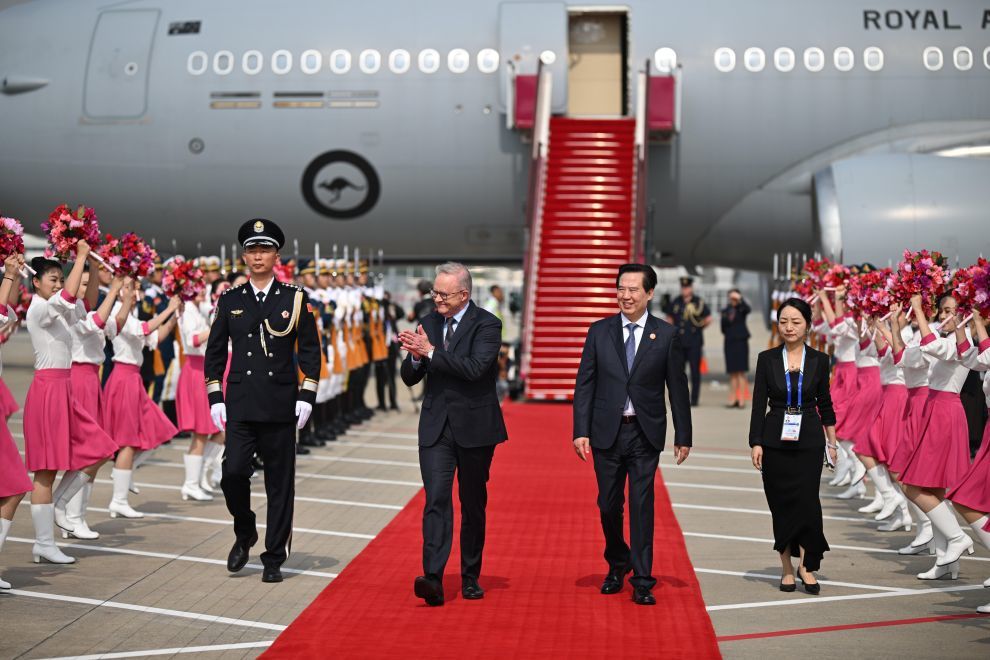
澳大利亚总理阿尔巴尼斯抵达深圳。图源:新华社
Australian Prime Minister Anthony Albanese arrives in Shenzhen. Photo: Xinhua.
澳大利亚希望可以从APEC获取更多贸易机会,也希望进一步扩大与中国的贸易往来。但是澳大利亚与亚洲的关系始终存在一定的不确定性。促进双方关系发展,需要时间,也需要加强教育、民间交流、学生往来和人员流动。中国近年来通过免签等政策,邀请更多外国人来到中国。许多首次来华的外国人亲眼看到中国的发展后都会觉得难以置信,发现现实中的中国与此前通过西方媒体形成的印象完全不同。
Australia expects more trade opportunities from APEC and greater gains from trade with China. That said, uncertainty has consistently characterized the relationship between Australia and Asia. Promoting the development of bilateral relations takes time and also entails more effort in advancing education, people-to-people exchanges, student exchanges, and personnel mobility. In recent years, China has extended invitations to more foreigners through visa-free policies and others. For many first-time visitors, China’s rapid development has seemed almost incredible, leading them to recognize the striking gap between reality and the impressions they had previously formed through Western media.
今年深圳APEC会议的一项重要价值,不仅在于正式会议本身,更在于会议之外领导人之间的交流。领导人共同用餐、参观以及非正式对话,都可能为各方沟通提供重要机会。比如,习近平主席、普京总统和特朗普总统之间进行的对话,其重要性甚至超过一些由官方组织的公开活动,他们的会面是非常有价值的。
APEC China 2026 in Shenzhen holds important value in the formal meeting and, more significantly, in leaders’ exchanges on other occasions. For leaders, dining, site tours, and informal conversations may all present opportunities for communication. Taking for example the dialogue between Chinese President Xi Jinping, Russian President Vladimir Putin, and U.S. President Donald Trump, it carries even more importance than some public events hosted by official departments. Their meeting is hence of immeasurable value.
未来,数字经济发展还面临区块链标准化的挑战。不同区块链系统之间如果缺乏兼容性,就像早期苹果操作系统与PC操作系统彼此不兼容一样,即使能够实现相似的功能,也无法顺畅地相互通信。因此,区块链开发和交易需要建立共同标准,尤其是在跨境交易领域。只有在多个司法管辖区域内实现标准统一和系统兼容,才能建立更加开放、透明、低摩擦的跨境交易体系。一个得到普遍认可、相互兼容的区块链结算系统,将是推动跨境贸易发展的重要基础。
In the future, the development of the digital economy will also face challenges related to blockchain standardization. In the absence of compatibility among different blockchain systems, smooth intercommunication will be impossible, even if each has similar functions — just as occurred earlier when macOS was incompatible with normal PC operating systems. Therefore, blockchain development and transactions require the establishment of common standards, particularly in cross-border transactions. Only by developing uniform standards and achieving system compatibility across multiple jurisdictions can a more open, transparent, and low-friction cross-border transaction system be established. A widely recognized and mutually compatible blockchain settlement system will serve as a crucial foundation for advancing cross-border trade.

戴若·顾比
澳大利亚金融市场技术分析师、Guppytraders首席执行官。长期担任CNBC亚洲频道技术分析师,持续跟踪中国经济,著有多部财经著作。
Daryl Guppy is an Australian technical analyst for financial markets and CEO of Guppytraders. He has long served as a technical analyst for CNBC Asia, continuously tracking the Chinese economy, and is the author of several books on finance.
本文内容整理自区域国别论坛第十场“全球名家”讲座。该讲座由中国人民大学全球领导力学院与中国人民大学区域国别研究院(重阳金融研究院)联合主办。
已获得本文转载及翻译授权。
Reproduction and translation rights have been obtained.
【未经授权,严禁转载!联系电话028-86968276】