



















近年来,随着中国全球影响力不断提升,海外“中文热”持续升温。在此背景下,四川国际传播中心特邀阿里·法拉比哈萨克国立大学教授、汉学专家法季玛·道列特(FATIMABIBI NOGAIKYZY DAULET)撰写署名文章。文章结合她三十余年的汉语学习、汉学研究与教学经历,从自身经历出发,探讨全球汉语热兴起的现实动因与文化意义,并分享她在中哈人文交流等方面的实践与思考。全文如下:
In recent years, as China’s global influence has continued to grow, interest in learning Chinese has been steadily rising around the world. Against this backdrop, the Sichuan International Communication Center invited Fatimabibi Nogaikyzy Daulet, a professor at Al-Farabi Kazakh National University and a scholar of Sinology, to contribute a signed article. Drawing on her more than three decades of experience in learning Chinese, conducting Sinological research, and teaching, she explores the real-world factors driving the global rise in Chinese language learning and its cultural significance from her personal perspective. She also shares her practical experience and reflections on people-to-people and cultural exchanges between China and Kazakhstan. The full article follows:
我最初接触中国文学,是通过俄文译本。鲁迅、老舍笔下对普通人命运的关注,深深吸引了我。我一直认为,文学是社会生活的一面镜子,能让我们走进普通人的内心世界。
I first encountered Chinese literature through its Russian translations. The deep concern for the fates of ordinary people running through the works of Lu Xun and Lao She deeply drew my attention. I have always believed that literature acts as a mirror of social life, opening a path leading to the inner worlds of everyday people.
从一次不服输的选择,到一生的汉学之路
From a Defiant Decision to a Lifetime Pursuit of Sinology
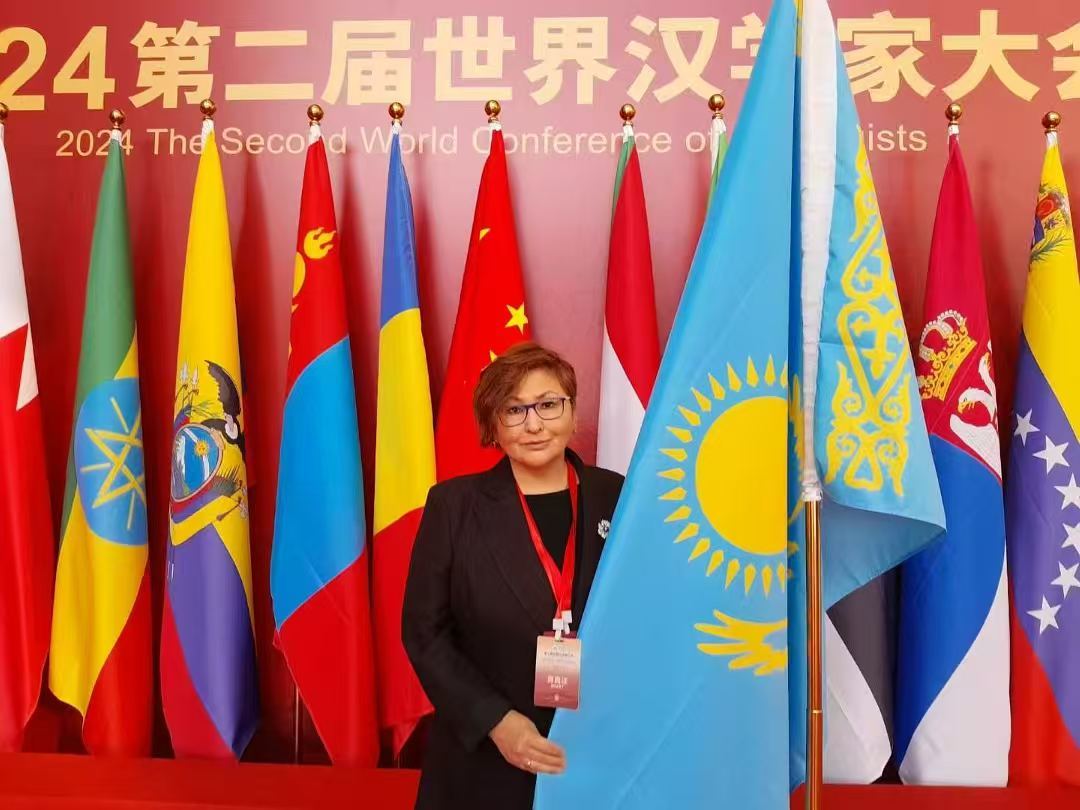
作者参加第二届世界汉学家大会。
The author attending the 2nd World Conference of Sinologists.
说起来,我走上汉学研究道路,源于年轻时一次不服输的选择。1989年,我来到阿拉木图,原本打算报考新闻系。那年哈萨克国立大学刚成立东方学系,开设汉语、阿拉伯语和波斯语专业。听说汉语最难学,我反而毫不犹豫地选了它。当时的想法很简单:既然难,就一定要挑战一下自己。没想到,这个决定竟改变了我的一生。
Looking back, it was a defiant decision I made in my early days that led me on my study journey of sinology. In 1989, I came to Almaty. Initially, I intended to apply to the Faculty of Journalism. That year, Al-Farabi Kazakh National University newly established its Faculty of Oriental Studies, which offered Chinese, Arabic, and Persian programs. Having heard of the extreme difficulty of learning Chinese, I chose it without hesitation. My thought was simple: Difficult as the task may be, I must take on the challenge. Unexpectedly, this decision would actually change my entire life.
1993年,我来到新疆大学留学,第一次真正置身于中国的语言文化环境中。当时,我与中国同学一起上课、生活。一位朋友送给我几本三毛的作品,《哭泣的骆驼》《撒哈拉的故事》等。她笔下自由洒脱的生活态度、对异域文化的好奇,让我感受到文学跨越国界的共鸣。也是在新疆大学,我遇到胡艾华老师,在她的指导下开始中哈成语对比研究,从语言学习转向系统学术。1999年,我完成了以汉语和哈萨克语熟语对比研究为主题的学位论文。此后研究领域逐渐拓展到汉语文化语义、民族认知模式及语言中的文化编码。
In 1993, I came to Xinjiang University as an international student, finding myself truly immersed in China’s linguistic and cultural environment for the first time. At that time, I attended classes and lived alongside my Chinese classmates. A friend gave me several books by Sanmao, including “The Crying Camel” and “Stories of the Sahara.” Her free-spirited attitude toward life, as well as her curiosity about foreign cultures, ran through every line in each of her books, allowing me to experience the cross-border echoes struck by literature. At Xinjiang University, I became acquainted with my instructor Hu Aihua, under whose guidance, I started the comparative studies of Chinese and Kazakh idioms, shifting my focus from language learning to systematic academic research. In 1999, I completed my dissertation on the comparative study of Chinese and Kazakh idioms. Since then, my research has gradually expanded to cultural semantics in Chinese, ethnic cognitive patterns, and cultural coding in language.
虽然重心转向语言学,但我对中国文学的热爱从未改变。我珍藏着王蒙的《青春万岁》,喜欢莫言魔幻现实主义的手法,读余华《女人的胜利》时甚至落泪——一位男性作家竟能如此细腻地捕捉女性心理,令我惊叹。我始终相信,要真正理解一个国家,必须走进它的文学世界。
In spite of my focus shifting to linguistics, my love for Chinese literature has never waned. Among my precious collections is “Long Live Youth” by Wang Meng. I am also attracted by Mo Yan’s writing style of magical realism while also being so deeply touched by “Women’s Victory” by Yu Hua as to shed tears — it is astounding that a male writer can capture the female psyche in such a sensitive way. I always believe that to truly understand a nation calls for understanding its literature.
打开另一种世界观:我眼中的“中文热”
Open up Another Vision of the World: “Chinese Language Fever” in My Eyes
三十多年来,我亲身见证哈萨克斯坦汉语教育的发展。过去学生多出于文化兴趣而学习中文,如今动机更多元:经贸、新闻、科技等领域的年轻人也开始重视中文,意识到它可能为职业发展带来机会。
Over the past three decades, I have witnessed the development of Chinese language education in Kazakhstan. In the past, most students learned Chinese out of cultural interest; today, by contrast, their learning motivations are far more diverse. Young people in fields such as economics, trade, journalism, and science and technology now also attach greater importance to Chinese, aware that proficiency in the language can open up new opportunities for their career development.
要理解中亚的“中文热”,还要从地理和历史来看。早在古丝绸之路时期,中亚就是连接东西方文明的纽带。中国有句老话:“远亲不如近邻。”既然是邻居,就应该努力了解彼此的语言和文化。
Geography and history provide a clearer insight into the “Chinese Language Fever” in Central Asia. As early as the era of the Ancient Silk Road, Central Asia emerged as a bridge connecting eastern and western civilizations. There is an old saying in China: Distant relatives are no match for close neighbors. That is why, for neighboring countries, it is necessary to learn about each other’s languages and cultures.
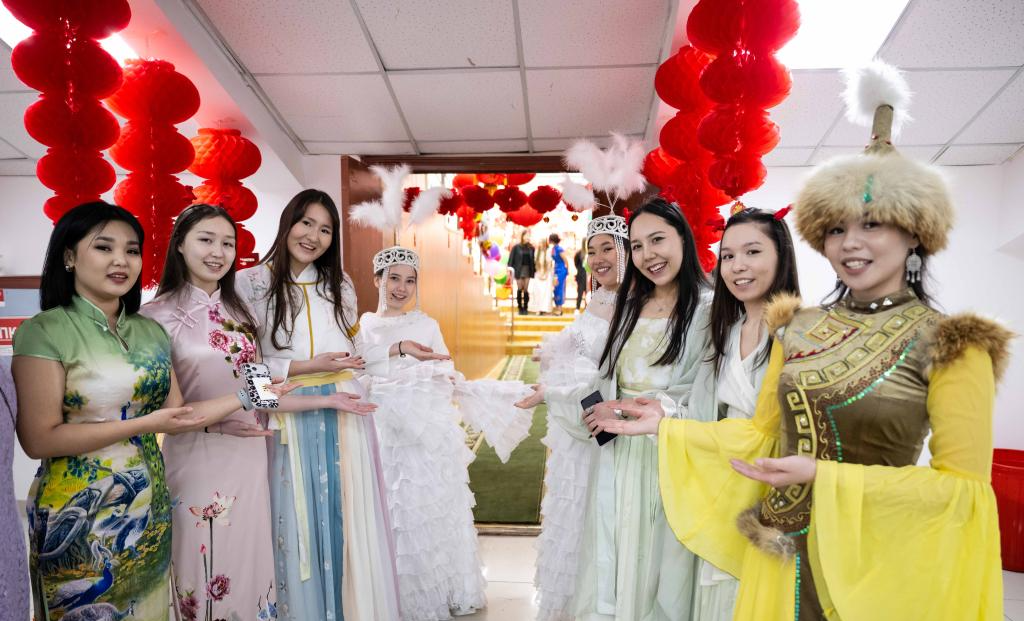
法拉比国立大学孔子学院举办春节活动。(图源:新华社)
Spring Festival Celebration at the Confucius Institute of Al-Farabi Kazakh National University. Photo: Xinhua.
近年来,中亚中文教育平台不断发展。截至2025年,中亚五国共设13所孔子学院,其中哈萨克斯坦5所。此外,多国还开展了鲁班工坊项目。但我始终认为,国际教育合作不仅要重规模,更要重质量、重学术自主,并尊重不同文化传统。在我看来,如今海外“中文热”持续升温,与中国全球影响力提升密切相关。
Recent years have been marked by the continuous growth of Chinese education platforms in Central Asia. According to 2025 data, there are an aggregate of 13 Confucius Institutes in 5 countries in Central Asia, among which 5 are located in Kazakhstan. Moreover, the Luban Workshop program is thriving in multiple countries. For my part, I believe that beyond expanding the scale of cooperation, international educational partnerships should place greater emphasis on quality, academic autonomy, and respect for diverse cultures and traditions. In my view, the ongoing expansion of the overseas “Chinese Language Fever” in recent years is closely tied to China’s growing global influence.
我认为,近年来海外“中文热”的持续升温,是多种因素共同作用的结果。首先,这与中国在全球经济、科技发展和国际合作中的影响力不断提升密切相关。中国在制造业、国际贸易、数字经济、人工智能、新能源和高等教育等领域的发展,为越来越多的外国青年学习中文提供了现实动力。
To my mind, the ongoing expansion of the overseas “Chinese Language Fever” in recent years is fueled by varying factors. First, it is associated with China’s growing global influence in the global economy, scientific and technological development, and international cooperation. China’s advances in fields including manufacturing, international trade, the digital economy, artificial intelligence, new energy, and higher education provide a practical motivation for a growing number of young people around the world to learn Chinese.
过去,人们想到学中文,首先想到翻译或外交;如今,工程师、企业管理者、信息技术人才也开始重视中文能力。但若仅从经济利益看待“中文热”,还远远不够。作为语言学家,我认为学一门语言最有价值之处,在于打开另一种认识世界的视角。
Previously, when it came to learning Chinese, people tended to think that it was just something done by would-be translators or diplomats. But now, engineers, enterprise managers, and IT talents are placing more emphasis on the mastery of Chinese. Still, more aspects than economic interests should be considered to understand this “Chinese Language Fever”. As a sinologist, I think the most valuable thing about learning a language is that it opens up another vision of the world.
与此同时,现代科技也为中文学习创造了便利,网络课程、影视、社交媒体让接触渠道更丰富。但比起学习人数,我更关心深度和质量。我希望年轻人不仅能用中文交流,更能走近中国历史、文学、哲学,理解中国人的思维方式。
At the same time, modern technology increases the convenience of learning Chinese: online classes, films and television, and social media have all diversified access to Chinese. For all that, I care more about the learning depth and quality than the scale. Hopefully, more overseas young people will communicate in Chinese and more importantly, gain a closer understanding of Chinese history, literature, and philosophy, and grasp Chinese ways of thinking.
以学术为桥,让邻国看见真实的中国
Academic Research as a Bridge: Presenting a Real China to Its Neighboring Countries
今年 6 月我在塔什干参加第二届中亚汉学论坛,一位乌兹别克斯坦的年轻学者问我:“汉学研究发展得过于强大,会不会给这个地区带来风险?” 我回答:“恰恰相反,我们需要强大的汉学研究。”中国是我们的邻国和重要合作伙伴,不仅要了解,更要深入、客观、专业地研究。无知不会让世界更安全,深入的研究才能减少误解。汉学家的使命不是一味赞美或带着偏见批评,而是提供可靠的知识与解读。
In June of this year, at the Second Central Asia China Studies Forum in Tashkent, a young Uzbek scholar asked me, “Sinology has grown so prominent — could this pose a risk to Central Asia?” I replied, “On the contrary, we need solid sinological research.” China is our neighbor and a key partner, which calls for understanding and studying it in depth, objectively, and professionally. Ignorance does not make the world a safer place; only in-depth research can reduce misunderstandings. The mission of sinologists is not to offer blind praise or biased criticism, but to provide reliable knowledge and insights.
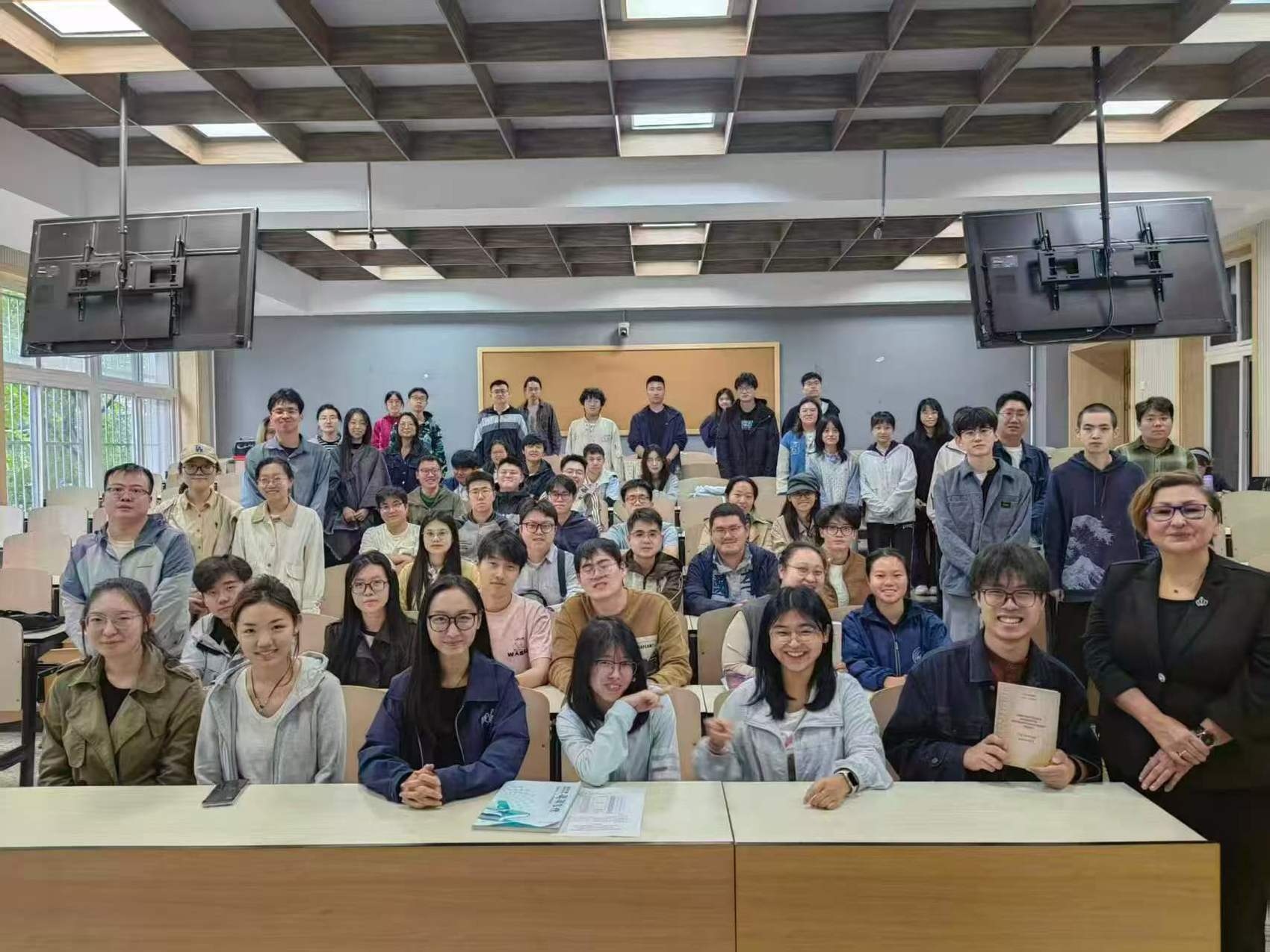
2026年10月作者在西北工业大学举办学术讲座。
In October 2026, the author delivered an academic lecture at Northwestern Polytechnical University.
“中文热”不仅带动语言学习,也为培养熟悉中国的专业人才创造条件。近年来中哈教育合作不断深化,我所在的阿里·法拉比哈萨克国立大学,2023年10月启用西北工业大学哈萨克斯坦分校。不久前,我应西工大邀请,在西安举办讲座,参加讲座的学生们对哈萨克斯坦表现出浓厚兴趣。今天课堂上的年轻人,未来或许就是两国合作的桥梁。
This “Chinese Language Fever” has not only boosted language learning, but also laid the groundwork for nurturing professionals with deep knowledge of China. In recent years, Sino-Kazakhstani educational cooperation has kept deepening. At Al-Farabi Kazakh National University, where I am based, the Kazakhstan Branch Campus of Northwestern Polytechnical University (NPU) was officially launched in October 2023. Not long ago, I was invited by NPU to deliver a lecture in Xi’an, where attending students showed strong interest in Kazakhstan. The young people sitting in classrooms today may well serve as bridges for cooperation between our two countries in the future.
2006年,我出版了《中国: 传说与真相》。那时我希望帮哈萨克斯坦读者客观认识中国。二十年过去,我的研究兴趣深化了:如果说当年关注“我们如何认识中国”,今天更想回答“中国人如何通过自己的语言认识世界”。一个民族的历史记忆、价值观念和文化心理,又是如何保存在语言之中,并通过语言代代相传的?这一问题逐渐成为我近年来学术研究的核心。
In 2006, I published my work “Chinese Legends and Truths”, hoping to help Kazakhstani readers develop an objective understanding of China. Two decades on, my research interests have deepened: while my early work focused on the question of “how we perceive China,” I am now more dedicated to answering another question: “How do the Chinese people understand the world through their own language?” Specifically, how are a nation’s historical memory, values, and cultural psychology preserved in language and passed down from generation to generation? This question has gradually become the core of my academic research in recent years.
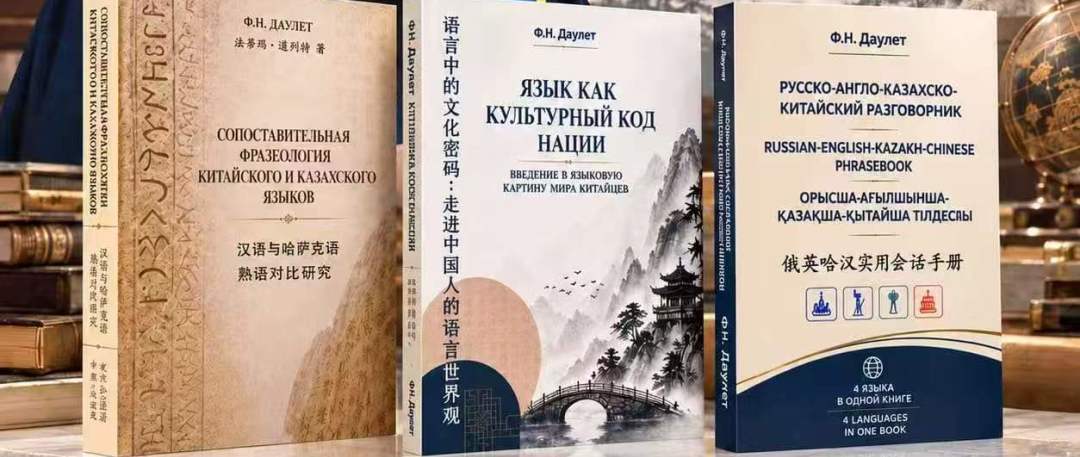
作者撰写的三本研究著作,已于2026年出版。
The author's three research monographs were published in 2026.
2026年,我出版了三部新著:《语言中的文化密码:走进中国人的语言世界观》《汉语与哈萨克语熟语对比研究》《俄英哈汉实用会话手册》。三本书虽领域不同,但都探讨语言与文化如何相互影响、共同塑造认识世界的方式。此外,我还与北京语言大学世界汉学中心合作,将《论语》译成哈萨克语,希望让更多哈萨克语读者直接读到这部中国思想经典。
In 2026, I published three new works: “Cultural Codes in Language: Exploring the Chinese Worldview Through Language”, “A Comparative Study of Chinese and Kazakh Idioms”, and “A Practical Conversation Handbook: Russian, English, Kazakh, and Chinese”. Though they focus on three distinct fields, they all examine how language and culture interact to jointly shape the way we perceive the world. In addition, I collaborated with the World Sinology Center at Beijing Language and Culture University on the translation of “Analects of Confucius” into Kazakh, hoping to give more Kazakh-speaking readers direct access to this classic of Chinese thought.
回顾我的汉学之路,我越来越深刻地认识到,最初吸引我的是汉语的独特魅力,中国文学让我感受到鲜活的人性与社会,而学术研究则引领我探索语言承载的历史记忆和思维方式。三十多年前,我因为好奇而选择了汉语;直到今天,这份探索的热情依然没有改变。
By reviewing my journey of sinological studies, I am increasingly and profoundly aware that initially, it was the Chinese language’s unique charm that aroused my interest; later, Chinese literature presented vivid humanity and society to me; and finally, academic research led me through the historical memories and ways of thinking borne by the language. More than 30 years ago, I chose Chinese out of curiosity; to date, my passion for exploration has never wavered.
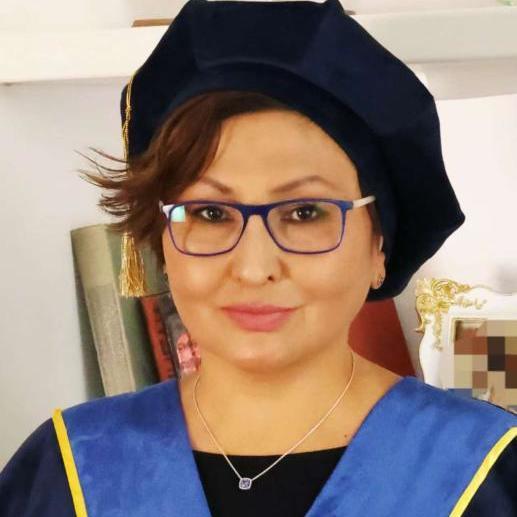
法季玛·道列特
哈萨克斯坦汉学家、语言学家、翻译家,哈萨克斯坦法拉比国立大学汉学教授。主要研究方向包括汉语语言文化学、中哈语言对比研究、文化代码、翻译学、跨文化交际以及汉语教学。在国际学术期刊发表多篇论文。
A Kazakhstani Sinologist, linguist, and translator, she is a professor of Chinese Studies at Al-Farabi Kazakh National University. Her main research interests include Chinese linguistics and culture, Chinese-Kazakh linguistic comparison, cultural codes, translation studies, intercultural communication, and Chinese language teaching. She has published numerous papers in international academic journals.
已获得本文转载及翻译授权
Reproduction and translation rights have been obtained.
【未经授权,严禁转载!联系电话028-86968276】