



















今年是中国共产党成立105周年。值此之际,四川国际传播中心特邀尼泊尔英文周刊《人民评论》(People's Review)主编普什帕·拉杰·普拉丹(Pushpa Raj Pradhan)撰写署名文章,并于7月23日发布于《人民评论》(People's Review)官方网站。文章结合他自1995年以来多次访华经历以及亲眼见证中国巨大变化的所思所感,就长征精神与中国变革之间的联系分享其见解。全文如下:
This year marks the 105th anniversary of the founding of the Communist Party of China (CPC). Sichuan International Communication Center invited Mr. Pushpa Raj Pradhan, Editor-in-Chief of Nepal's People's Review English Weekly, to contribute a signed article, which was published on the official website of People's Review on July 23. Drawing on his visits to China since 1995 and his firsthand observations of the nation's remarkable transformation, Mr. Pradhan shares his insights into the connection between the Long March spirit and China's development. The full text is as follows:
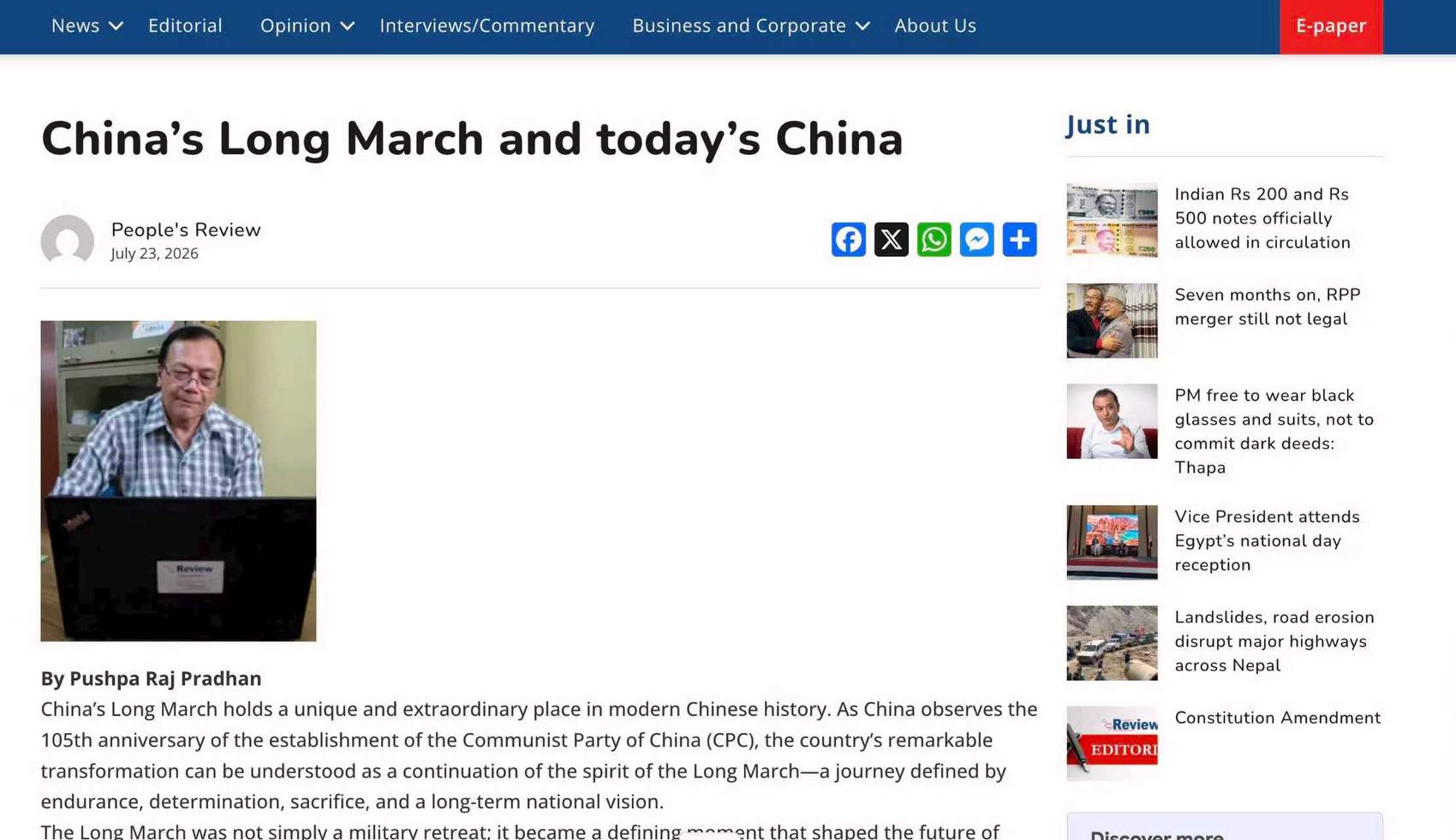
尼泊尔英文周刊《People's Review》报道截图。
报道链接:https://peoplesreview.com.np/2026/07/23/chinas-long-march-and-todays-china/
长征在中国近代史上占据着独特而非凡的地位。值此中国共产党成立105周年之际,中国取得的巨大变化可视为长征精神的延续与传承——这种精神源于一段由坚韧不拔、坚定不移、牺牲奉献和长远国家愿景所铸就的征程。
The Long March holds a unique and extraordinary place in modern Chinese history. As China observes the 105th anniversary of the establishment of the Communist Party of China (CPC), the country's remarkable transformation can be understood as a continuation of the spirit of the Long March—a journey defined by endurance, determination, sacrifice, and a long-term national vision.
红军长征不仅是一次保存革命火种的伟大壮举,更是一次深刻改变中国命运的战略转移。1934年10月,红军第五次反“围剿”失败被迫开始长征。长征途经中国最险峻的地形地带——其中不乏山脉、河流和草原,行程延绵数万公里。途中无数将士牺牲,但幸存的红军队伍成功保存了共产主义革命的火种。
The Chinese Red Army's Long March was not only a remarkable feat to preserve the revolutionary cause, but also a strategic transfer that profoundly altered the course of China's history. The Red Army failed in their battle against the fifth encirclement and suppression campaign, and was forced to embark on the Long March. The march covered thousands of kilometers through some of the most difficult geographical areas of China, including mountains, rivers, and grasslands. Thousands of soldiers lost their lives during the journey, but the surviving forces succeeded in preserving the Communist movement.
数十年来,中国经历了人类历史上最为深刻的变革之一。曾经一穷二白的国家,如今已成为世界第二大经济体、重要工业强国,并成为全球科技领域的引领者。中国经济的崛起使数亿人摆脱贫困,并改变了全球经济格局。
Over the decades, China has undergone one of the most remarkable transformations in human history. China, once a country with virtually nothing to its name, has now become the world's second-largest economy, a major industrial power, and a global leader in the field of science and technology. China's economic rise has lifted hundreds of millions of people out of poverty and changed the global economic landscape.
中国的发展转型与中国共产党制定和实施的政策及发展战略密切相关。1949年中华人民共和国成立后,中国致力于国家重建、提高国民文化素养、发展基础产业,并建立国家机构。1978年,邓小平推动经济改革和对外开放政策,吸引外资、融入全球贸易体系,成为中国发展进程中的一个重大转折点。这些改革逐步推动中国从中央计划经济向更加市场化的经济体系转变。
The transformation of China is closely linked with the policies and development strategies introduced by the Communist Party of China. After the founding of the People's Republic of China in 1949, the nation focused on rebuilding the country, improving literacy, developing basic industries, and creating national institutions. A major turning point came in 1978 when Deng Xiaoping introduced economic reforms and the policy of opening China to foreign investment and global trade. These reforms gradually changed China from a centrally planned economy into a dynamic socialist market economy.
如今,中国已拥有全球最大的制造业,是主要出口经济体之一,科技产业也正快速发展。在高速铁路、可再生能源、人工智能、电信、电动汽车和航天技术等领域,中国取得了显著进展。中国企业已在众多先进产业中成长为具有全球竞争力的企业。
Today, China has the world's largest manufacturing sector, one of the largest export economies, and a rapidly expanding technology industry. It has made significant progress in areas such as high-speed rail, renewable energy, artificial intelligence, telecommunications, electric vehicles, and space technology. Chinese companies have become global competitors in many advanced industries.
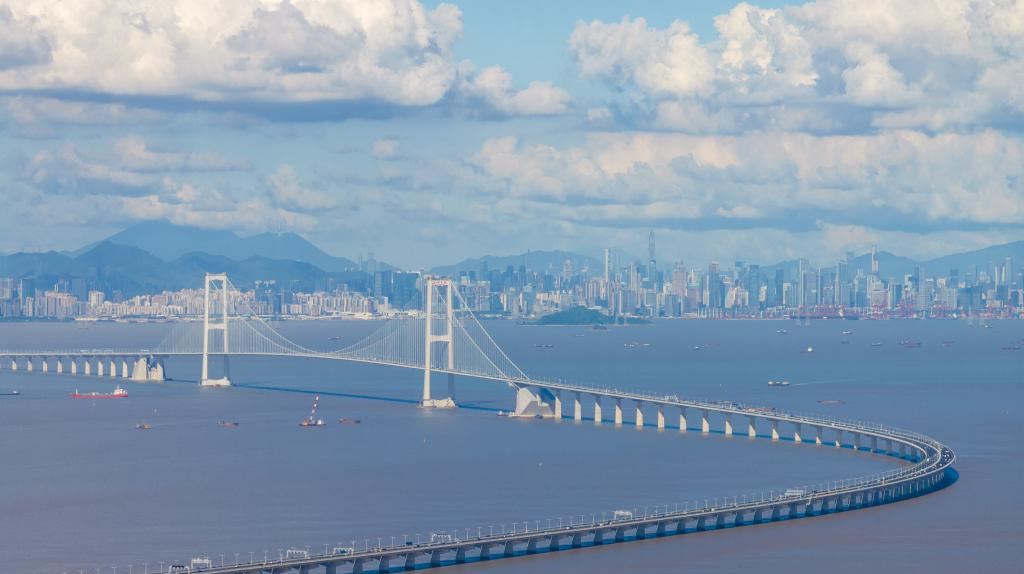
无人机拍摄的深中通道。(图源:新华社记者毛思倩)
The photo shows the Shenzhen-Zhongshan Link as captured by a drone. (Photo by Mao Siqian, Xinhua News Agency )
这些年我来过中国很多次,目睹了中国的发展变化。第一次是在1995年,那年,我经由西藏自治区拉萨进入中国,随后前往成都、北京和深圳。当时,西藏仍处在发展的初期阶段。我们抵达西藏的老机场时,当地基础设施还比较有限。洗手间没有稳定的供水,就连酒店的热水也仅在一天中的特定时段供应。由于将新鲜食品运送到高海拔地区困难重重,导致了当地饮食结构的单一,容易获取的肉干便成了当地餐桌上常见的菜品。
I had the opportunity to visit China on several occasions and witness its transformation firsthand. The first opportunity came in 1995 when I entered China through Lhasa in the China's Xizang Autonomous Region and later visited Chengdu, Beijing, and Shenzhen. At that time, Xizang was still in the early stages of development. When we landed at the old Xizang airport, basic facilities were limited. There was no regular water supply in washrooms, and even hotels had restricted hot water availability, with hot water supplied only during certain hours of the day. Food choices were also limited, with dry meat being a common part of local meals due to difficulties in transporting fresh food items to the high-altitude region.
几年后,我再次来到西藏,那里发生了令人瞩目的变化。现代化的国际机场取代了原来的旧机场。食品供应显著改善,西瓜、香蕉等新鲜水果已十分常见。当地人告诉我,部分水果甚至是从泰国等国家进口的。当地居民的生活水平也有了明显提高,拉萨实现了24小时供电,并配备了现代化的供暖系统。
A few years later, during another visit to Xizang, the changes were remarkable. A modern international airport had replaced the old facility. The availability of food had improved significantly, and fresh fruits such as watermelons and bananas were easily available. Local people explained that some fruits were imported from countries such as Thailand. The standard of living had improved considerably, with 24-hour electricity supply and modern heating systems available in Lhasa.
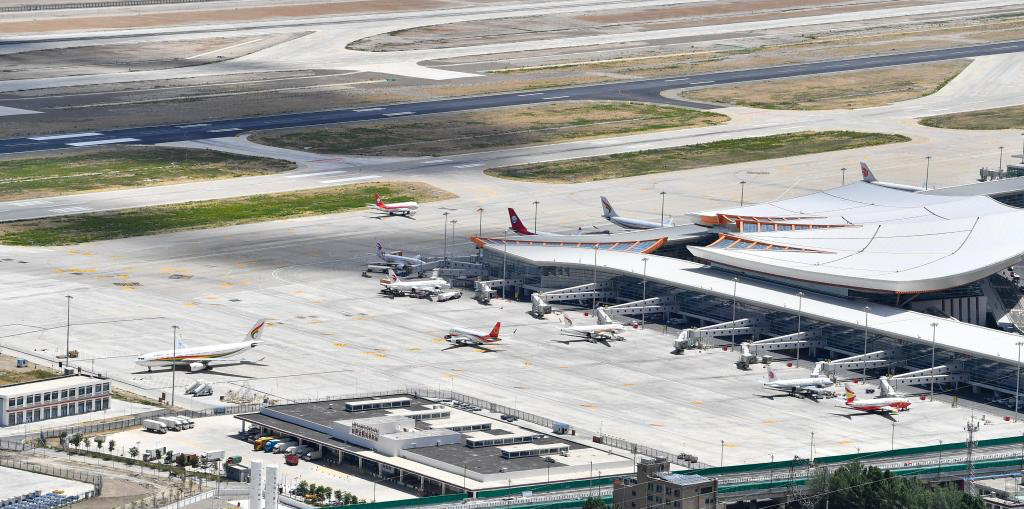
拉萨贡嘎国际机场。(图源:新华社记者晋美多吉)
Lhasa Gonggar International Airport. (Photo by Jigme Dorje, Xinhua News Agency )
中国的发展经验也为周边发展中国家提供了重要启示。尼泊尔虽然与中国地理相邻,共享边界,并拥有悠久的历史联系,但由于政治不稳定、治理薄弱以及政策缺乏连续性,其经济发展一直面临挑战。
However, China's development experience also provides important lessons for neighboring developing countries. Nepal, despite being geographically close to China and sharing common international border and a long historical relationship, has struggled to achieve economic progress due to political instability, weak governance, and lack of policy continuity.
中国的经验证明,国家发展离不开长远的战略眼光、坚定的政治意愿、高效的体制机制协调,以及政策的一贯执行。尽管各国的政治与社会现实不尽相同,但稳定性、有效治理以及以发展为导向的领导力,对任何国家而言都具有普遍的重要意义。
China's experience demonstrates that national development requires long-term vision, political commitment, institutional coordination, and consistent implementation of policies. While every country has its own political and social realities, the importance of stability, effective governance, and development-oriented leadership remains universal.
长征至今仍象征着一段坚持不懈、不断发展的历程。从一个曾深受贫困困扰的国家成长为全球经济和科技强国,中国的发展历程成为现代最重要的发展成就之一。对于尼泊尔等国家而言,中国的发展经验提供了一个重新思考长远规划、良好治理以及共同国家愿景对于实现可持续发展的重要性的契机。
China's Long March continues to symbolize a journey of perseverance and transformation. From a nation struggling with poverty to a global economic and technological power, China's rise represents one of the most significant developments of the modern era. For countries like Nepal, China's experience offers an opportunity to reflect on the importance of long-term planning, good governance, and a shared national vision for achieving sustainable development.
2013年秋,习近平总书记提出共建“丝绸之路经济带”和“21世纪海上丝绸之路”。中国对尼基础设施发展的支持非常重要,将会对尼产生长期积极影响。尤其是跨喜马拉雅互联互通对尼经济和基础设施发展有着重要意义。尼泊尔是“陆锁国”,在中国的支持下将成为“陆联国”。
In the fall of 2013, President Xi Jinping proposed the joint building of the Silk Road Economic Belt and the 21st Century Maritime Silk Road, namely the BRI. China's support for the development of infrastructure in Nepal is very important and will have a long-term positive impact on Nepal. In particular, cross-Himalayan interconnection is of great significance to the economic and infrastructure development of Nepal. Nepal is a "landlocked country" and will become a "land-linked" with the support of China.
近期,中国外交部长王毅在北京同尼泊尔新任外交部长希西尔·卡纳尔(Shishir Khanal)举行会谈,再次强调了中尼保持密切关系的重要性。谈及睦邻关系时,王毅部长引用了一句谚语:“远亲不如近邻。”这一表述强调了中国的周边外交理念。
Recently, Chinese Foreign Minister Wang Yi reiterated the importance of close relations between Nepal and China during his bilateral discussions with Nepal's newly appointed Foreign Minister Shishir Khanal in Beijing. Referring to the importance of neighborhood relations, Wang quoted the proverb, "A near neighbor is better than a distant relative." The remark emphasized China's approach toward neighborhood diplomacy.

尼泊尔的雪山风光。(图源:新华社记者周盛平)
The Snow-Capped Mountains of Nepal. (Photo by Zhou Shengping, Xinhua News Agency)
鉴于尼泊尔独特的地缘位置,加强其与中国在基础设施、技术、贸易、旅游和投资等领域的合作,将会大力推动尼泊尔的经济转型。
Given Nepal's unique geographical location, strengthening cooperation with China in areas such as infrastructure, technology, trade, tourism, and investment can contribute significantly to Nepal's economic transformation.

普什帕·拉杰·普拉丹
尼泊尔资深媒体人,现任《People's Review》英文周刊主编。长期关注尼泊尔外交、国际关系、地区合作及中尼关系等议题,曾多次访问中国,并持续就中国发展、中国与南亚合作等主题发表评论与分析。
Pushpa Raj Pradhan is a veteran Nepali journalist and the Editor-in-Chief of People's Review English Weekly. He has long focused on Nepal's foreign affairs, international relations, regional cooperation, and Nepal–China relations. Having visited China on multiple occasions, he has written extensively on China's development and cooperation between China and South Asia.
已获得本文转载及翻译授权
Reproduction and translation rights have been obtained.
【未经授权,严禁转载!联系电话028-86968276】