



















值此中埃建交70周年之际,中国国家主席习近平在出席上海合作组织比什凯克峰会后对埃及进行国事访问。四川国际传播中心邀请长期致力于中埃人文交流的汉学家、《红高粱家族》、《我的阿勒泰》翻译者哈赛宁·法赫米·侯赛因教授撰写署名文章。作者结合多年学习、研究和传播中国文化的经历,回望自己与中国结缘的故事,讲述埃及年轻人眼中的中国如何从书本和影视走向更加真实、多元的当代中国,并分享对中埃教育、文化及人文交流不断深化的观察与期待。全文如下:
On the occasion of the 70th anniversary of the establishment of diplomatic relations between China and Egypt, Chinese President Xi Jinping is paying a state visit to Egypt after attending the Shanghai Cooperation Organization (SCO) Summit in Bishkek. Taking this opportunity, the Sichuan International Communication Center (SICC) invited Professor Hassanein Fahmy Hussein, a sinologist who has long dedicated himself to Sino-Egyptian cultural exchanges, and the translator of "Red Sorguhum" and "My Altay", to author a signed article. Drawing on all his years of studying, researching, and promoting Chinese culture, Hassanein reflects on his lifelong bond with China and explains how, in the minds of young Egyptians, China has evolved from a country in stories and films into a more tangible, diverse contemporary nation. He also shares his insights and expectations regarding the deepening of Sino-Egyptian educational, cultural, and people-to-people exchanges. The full text is as follows:

埃及尼罗河。(新华社记者 隋先凯 摄)
The Nile River in Egypt. (Photo by: Sui Xiankai, Xinhua News Agency)
1979年,我出生在埃及南方艾斯尤特省一个小农村,那是一个典型的尼罗河村落。尼罗河滋养着世代埃及人,如同黄河和长江哺育着华夏儿女。正是这片土地赋予我的成长记忆,让我从很早开始就对远方的古老文明心生向往。
In 1979, I was born in a small village in Assiut Governorate, southern Egypt — a typical Nile River settlement. The Nile has nourished generations of Egyptians, just like the Yellow River and the Yangtze River have nurtured the Chinese nation. It was the childhood memories shaped by this land that kindled my yearning for distant ancient civilizations.
年少时我对语言格外敏感,英语和法语学起来都比较快,也因此对外面的世界充满了好奇。每当遇到外国人,我总会忍不住主动上前交流。1995年,高中的我在埃及卢克索参加全国知识竞赛,偶遇来自中国香港的旅游团,那是我人生第一次与中国人交谈。那时的我,从功夫电影、针灸、长城与兵马俑的故事里,想象着那个和埃及一样古老的东方国度。
From a young age, I had a natural aptitude for languages and picked up English and French fairly quickly, which filled me with curiosity about the world beyond. Whenever I met foreigners, I could not help but approach them and strike up a conversation. In 1995, as I, a high school student, headed to Luxor for a national knowledge competition, I stumbled upon a tour group from Hong Kong, China. That was the first time I had ever talked with a Chinese person in my life. Back then, my imagination of China, an ancient Eastern country just as age-old as Egypt, came from kung fu films, as well as the stories of acupuncture, the Great Wall, and the Terracotta Warriors.
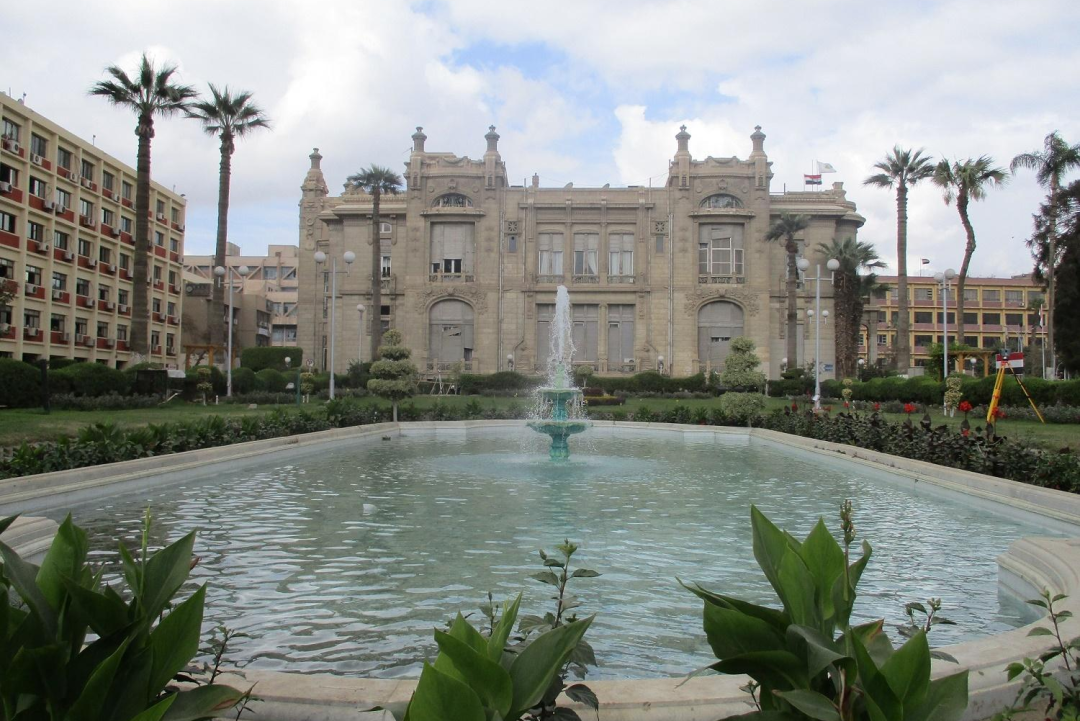
埃及艾因·夏姆斯大学。(图源:艾因·夏姆斯大学官网)
Ain Shams University in Egypt. (Credit: Ain Shams University official website)
1996年,我考入埃及著名高等学府艾因·夏姆斯大学,该校拥有阿拉伯世界和非洲最早设立的中文系。初入校园,汉语的难度曾让我萌生退意,但在家人鼓励下,我沉下心钻研。课余我常常泡在系图书馆,从简易汉语读本起步,一点点阅读中国风俗、历史人物与文学作品,一点点加深了对中国传统文化和改革开放的了解。本科毕业后,我选定以中国文学与文化作为研究方向。
In 1996, I was admitted to Ain Shams University, a prestigious institution of higher education in Egypt, which is home to the earliest-established Chinese language department in the Arab world and Africa. At the beginning, the complexity of the Chinese language made me feel quite disheartened. Yet, thanks to encouragement from my family, I settled down to study diligently and often spent my spare time in the departmental library. Starting with Chinese texts for beginners, I gradually progressed to reading about Chinese customs, historical figures, and literary works, step by step deciphering traditional Chinese culture and understanding the era of reform and opening-up. Upon graduating with my bachelor's degree, I chose Chinese literature and culture as my research interest.
深耕汉学这些年,我已翻译出版三十余部中国著作。我翻译的第一部作品是莫言的《红高粱家族》。2012年10月,莫言先生获得诺贝尔文学奖。三个月后,我翻译的莫言先生的代表作《红高粱家族》阿拉伯语译本在埃及出版。这也是莫言乃至中国乡村题材作家作品中较早被译介到阿拉伯语世界的作品,带动了中国当代文学在阿拉伯世界的传播热潮。
Over my years of dedicated research in sinology, I have completed the translation and publication of more than 30 Chinese works. My first translation was Mo Yan's "Red Sorghum". In October 2012, Mo Yan was awarded the Nobel Prize in Literature. Three months later, the Arabic edition of the "Red Sorghum" — one of my translation works — was published. This was among the earliest works by Mo Yan, and even other Chinese rural-themed writers, to be translated and introduced into the Arab world, sparking a wave of dissemination for contemporary Chinese literature across the region. Intriguingly, Chinese has been more than just a tool for my studies; it is also how I encountered the beloved of my life — the Chinese Language Department is where our story began. In this sense, China has long been what I call my second homeland.
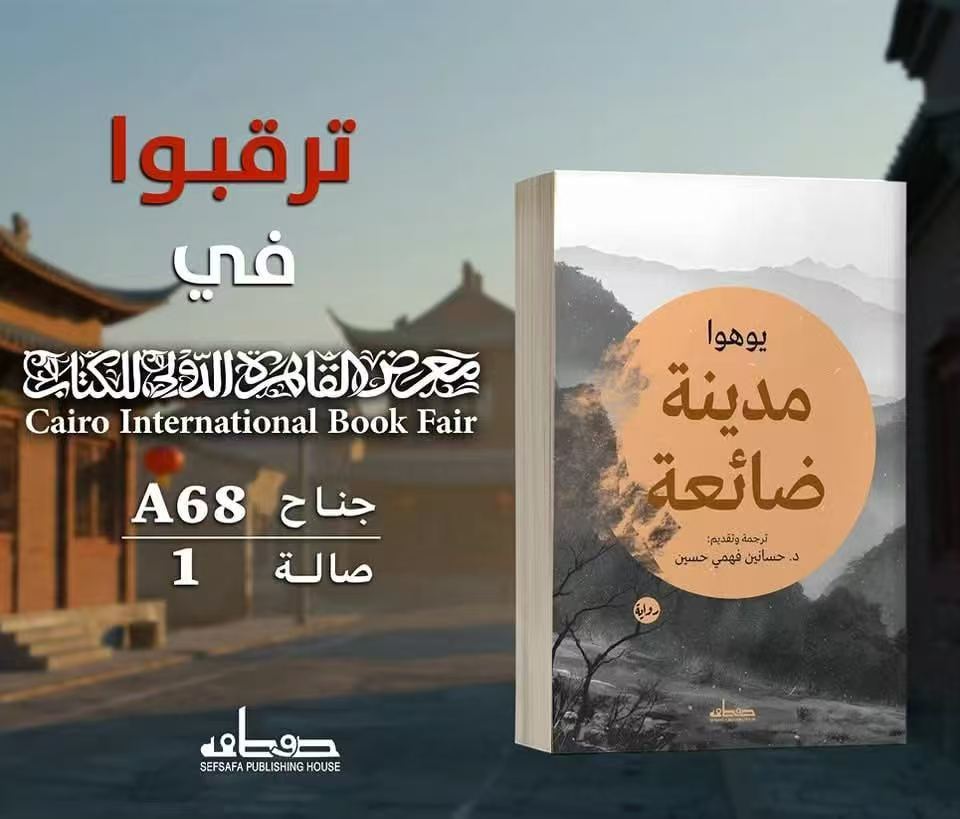
中国作家余华最新长篇小说《文城》阿拉伯语版由埃及丝富萨法出版社出版。哈赛宁教授 译
The Arabic edition of Chinese author Yu Hua's latest novel, "Wencheng", has been published by the Sefsafa Publishing House. Translated by Professor Hassanein.
现在我担任艾因·夏姆斯大学中文系系主任,我常常思考,一代代埃及年轻人眼中的中国,究竟发生了怎样的变化?过去,他们可能通过电影、书籍了解一个古老而神秘的中国。而今天,随着“一带一路”倡议不断推进,越来越多的中国企业来到埃及,在苏伊士运河经济区、伊斯梅利亚市等地参与建设。对学生们而言,学习中文也不再只是为了了解中国文化,更意味着毕业后能找到一份好工作,参与到中埃合作的浪潮中。因此,我们中文系的招生人数逐年攀升,我们也在不断丰富课程内容,以适应就业市场的需求。
Now, I serve as the Head of the Chinese Language Department at Ain Shams University. I often wonder how the understanding of China has changed across generations of young Egyptians. In the past, they might have come to know an ancient and mysterious China through films and books. Today, in contrast, with the continuous progress of the Belt and Road Initiative, a growing number of Chinese enterprises have come to Egypt, plunging into construction projects in the Suez Canal Economic Zone, Ismailia, among other regions. For our students, acquiring Chinese is no longer solely about gaining insights into Chinese culture; it also means securing a promising occupation upon graduation and becoming part of the Sino-Egyptian cooperation. Consequently, our Chinese Language Department has registered year-by-year growth in enrollment, and we, correspondingly, are constantly enriching our curriculum to adapt to the demands of the job market.
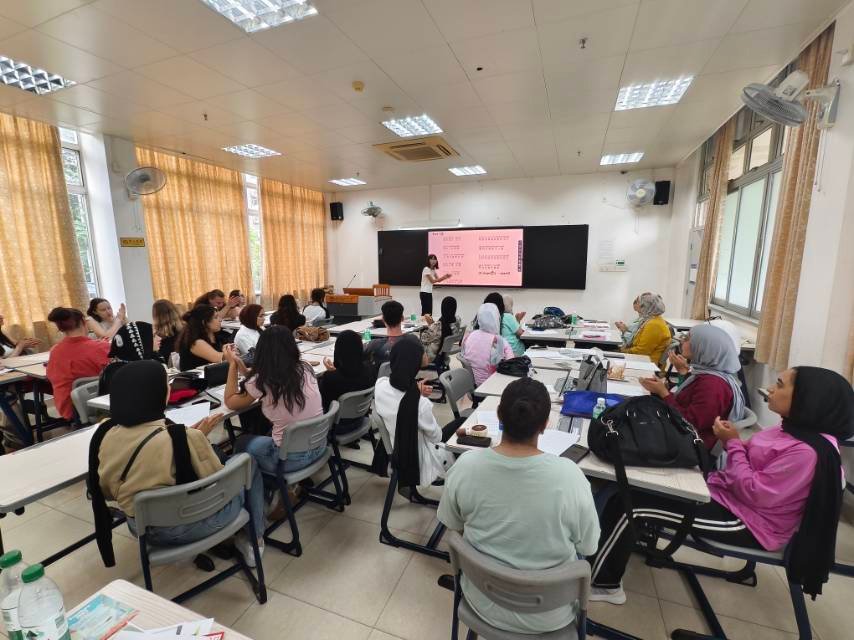
埃及学生上中文相关课程。(图由哈塞宁教授提供)
Egyptian students attending a Chinese-related course. (Photo: courtesy of Professor Hassanein)
如今,埃及民众了解中国的途径也愈发多元。中国影视剧受到埃及观众追捧,开罗、亚历山大等主要城市遍布中餐馆,中国饮食文化已赢得越来越多埃及食客的青睐。放眼整个阿拉伯地区,多国高校陆续开设中文专业,大批青年赴华学习深造,连接中阿两地的翻译人才队伍也在不断壮大。
Today, Egyptian people have access to an increasingly diverse range of channels to learn about China. Chinese TV series and films are well-received among Egyptian audiences. Meanwhile, Chinese restaurants are widespread across major cities including Cairo and Alexandria, where Chinese culinary culture has won a growing number of Egyptian enthusiasts. Across the Arab world, Chinese-language programs have been successively launched in institutions of higher education in multiple countries. Furthermore, large numbers of young people travel to China for further studies, with the pool of translators linking China and the Arab world keeping expanding.
当前世界百年变局加速演进,地区局势复杂多变,全球南方国家渴望加强团结合作,探索平等互利的发展路径。正是在这样的时代背景之下,中国国家主席习近平在出席比什凯克上海合作组织峰会后对埃及开展国事访问,恰逢中埃建交 70 周年这一重要历史节点。埃及也是首个将构建命运共同体目标写入双边关系联合声明的阿拉伯国家,中埃关系正处于历史最好时期。
Against the backdrop of momentous changes unseen in a century, along with complex and fluid regional situations, countries of the Global South aspire to strengthen solidarity and cooperation and explore development paths featuring equality and mutual benefit. It is against such a historical backdrop that Chinese President Xi Jinping paid a state visit to Egypt following his attendance at the SCO Summit in Bishkek, which coincides with the significant historical milestone marking the 70th anniversary of the establishment of diplomatic relations between China and Egypt. Of particular note, Egypt emerges as the first Arab country to include the goal of building a community with a shared future in a bilateral joint statement, and the bilateral ties are currently at their best in history.
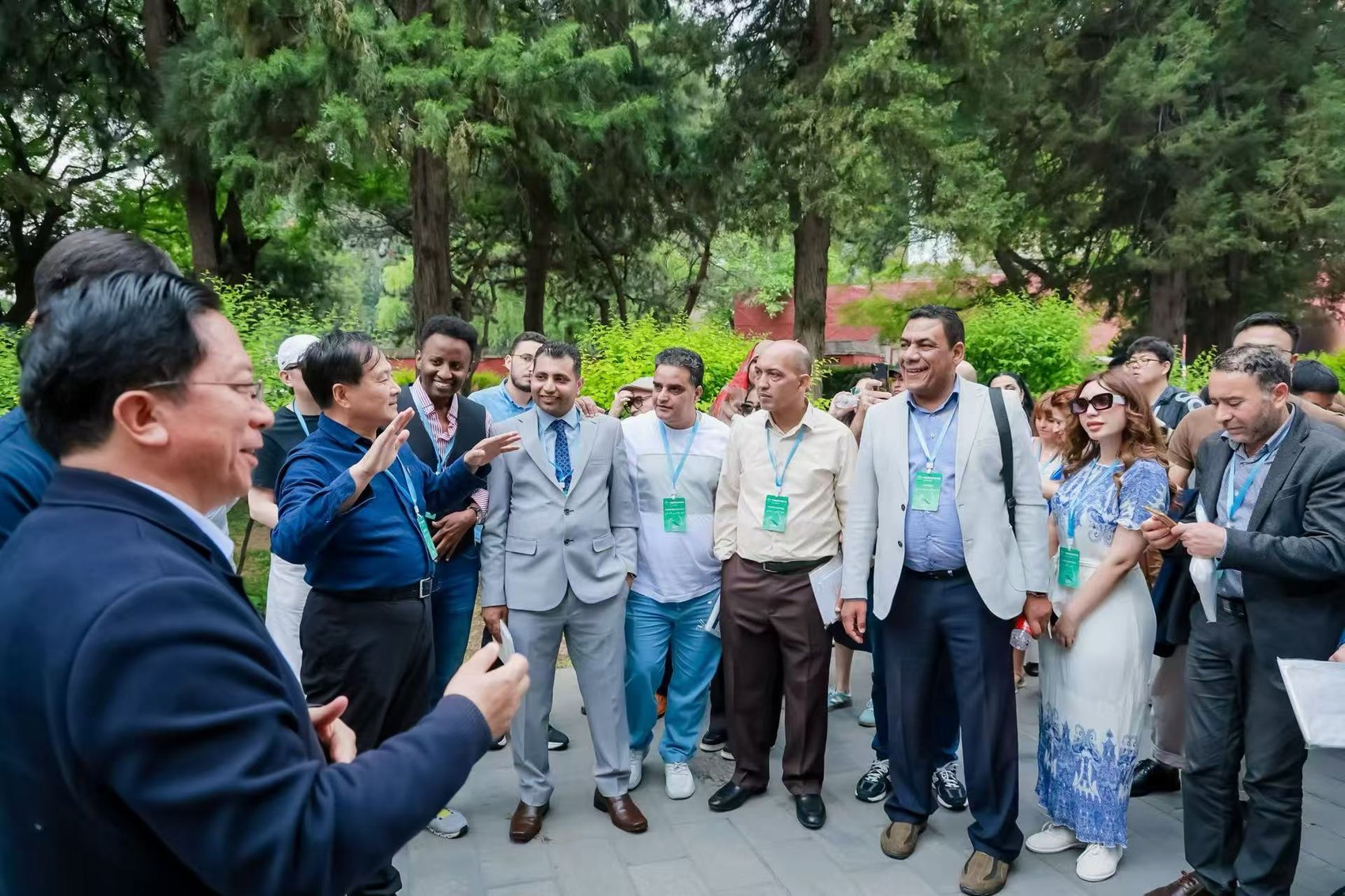
2026年5月,哈赛宁教授在中国参加“2026国际青春诗会”。
In May 2026, Professor Haseninen attended the "2026 International Youth Poetry Festival" in China.
作为深耕中埃人文交流的教育者与汉学家,我对中国国家主席习近平前往埃及进行国事访问充满期待。埃及学界和普通民众都十分重视此次访问。在纷繁复杂的现实挑战面前,此次访问充分表明,中国把埃及视作真诚可靠的伙伴。这将进一步巩固双边政治互信,共建“一带一路”倡议与埃及“2030愿景”深度对接,拓展经贸、产业、民生领域合作。此外,此次访问还将为中阿、中非加强团结合作发挥积极的示范作用,为地区和平与稳定注入新的动力。
Upon learning of this news, as an educator and sinologist deeply engaged in Sino-Egyptian cultural exchanges, I am filled with joy and anticipation. Both the Egyptian academic community and general public highly value this visit. Amid complex and multifaceted real-world challenges, this visit fully demonstrates that China considers Egypt as a sincere and reliable partner. It will further consolidate bilateral political mutual trust, advance the in-depth alignment of the Belt and Road Initiative with the Sustainable Development Strategy (SDS): Egypt Vision 2030, and expand cooperation in sectors including economy and trade, industry, and people's livelihoods. In addition, this visit will act as a positive exemplary model for strengthening solidarity and cooperation among Sino-Arab and Sino-African communities, while injecting fresh impetus into regional peace and stability.
回望中埃建交70年来,两大古老文明之间的交流从未止步。埃及文学名家的作品不断被译介到中国,莫言等中国作家的作品也走进阿拉伯读者的视野;中埃高校互设外语院系,搭建起双向文明对话的平台。“丝路书香工程”等文化交流项目落地埃及,推动图书互译、学者互访等人文交流不断深化。人文交流是民心相通的根基,经贸合作的蓬勃发展,更离不开文化交流的润物无声。
Looking back on the 70 years since the establishment of Sino-Egyptian diplomatic ties, exchanges between the two ancient civilizations have never ceased. Works by eminent Egyptian literary figures have been continuously translated and introduced into China, while writings by Chinese authors such as Mo Yan have reached Arab readership. Additionally, Chinese and Egyptian institutions of higher education have set up foreign-language departments on each other’s campuses, building platforms for two-way civilizational dialogue. Moreover, cultural exchange programs such as the Silk Road Book Project have been launched in Egypt, further deepening people-to-people exchanges including book translation and scholar interactions. People-to-people exchanges underpin mutual understanding between the two peoples, and the robust growth of economic and trade cooperation cannot thrive without the subtle yet nurturing power of cultural exchanges.
我由衷期待此次访问能够抓住中埃建交70周年的契机,进一步释放人文领域合作红利,在中文教育、文学互译、学者互访、青年交流上开辟更多务实新机遇,让中埃两大古老文明在新时代持续对话。
I sincerely hope that the opportunity presented by the 70th anniversary of the establishment of diplomatic relations could be seized during this visit to further unlock the dividends of cooperation in the field of people-to-people exchanges. Meanwhile, it is able to create more practical new opportunities in Chinese-language education, literary mutual translation, scholar interactions, and youth exchanges, so as to enable the two ancient civilizations of China and Egypt to sustain their dialogue in the new era.
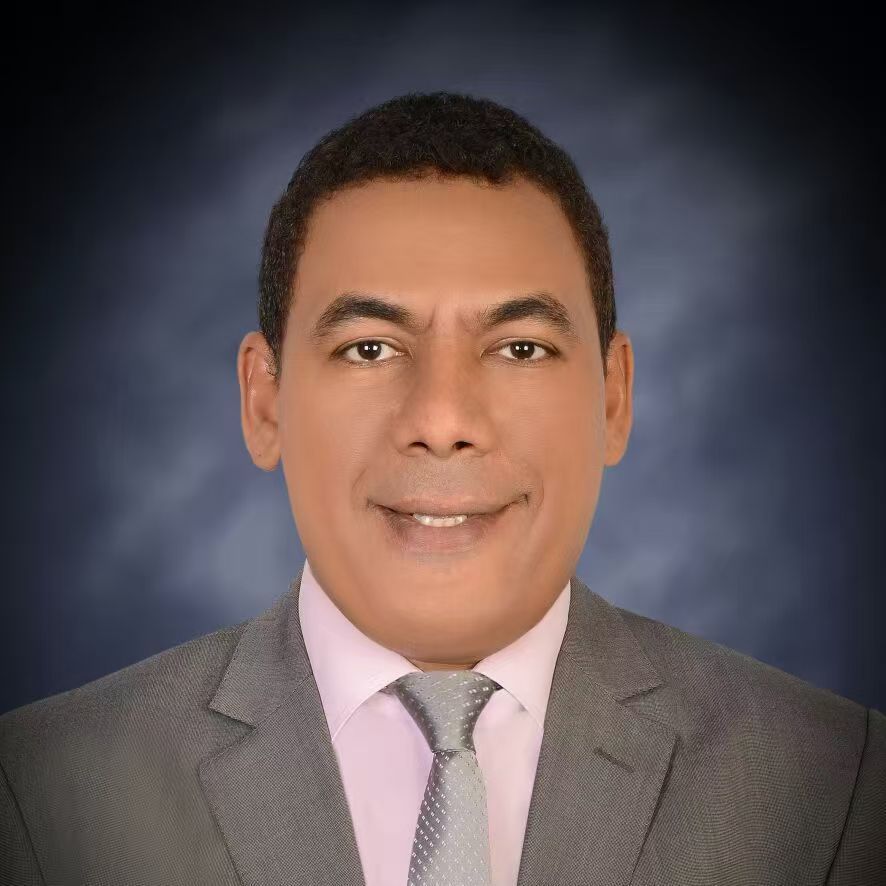
Hassanein Fahmy Hussein
(哈赛宁·法赫米·侯赛因)
哈赛宁·法赫米·侯赛因,埃及艾因·夏母斯大学语言学院中文系教授、系主任、硕博导师。曾为中阿多位元首、政要担任过外事访问同传。研究领域主要是中国文学、中阿比较文学与翻译学。翻译作品有《红高粱家族》,《许三观卖血记》,《手机》,《我的阿勒泰》等译著。
Hassanein Fahmy Hussein, Master and Ph.D Supervisors, Professor and Head of the Chinese Language Department at the Faculty of Al-Alsun, Ain Shams University, Egypt. Hassanein has worked as a simultaneous interpreter for multiple heads of state and senior political figures from China and Arab countries during their official overseas visits. His research focuses on Chinese literature, comparative Chinese-Arab literature, and translation studies. Works translated by Hassanein include "Red Sorghum", "Chronicle of a Blood Merchant", "Cell Phone", and "My Altay".
已获得本文转载及翻译授权
Reproduction and translation rights have been obtained.
【未经授权,严禁转载!联系电话028-86968276】