



















第二届世界古典学大会近日在希腊雅典举行。中希文明辉映、合作紧密,四川与希腊的文明对话也在巴蜀大地不断擦出火花。四川大学哲学系教授、中希文明互鉴中心副秘书长梁中和先生参会,他从中希两种古典哲学传统出发,呈现了一场关于人工智能未来的思想交锋。四川国际传播中心获其授权,转载讲稿精华,正文如下:
The Second World Congress of Classical Studies was held in Athens, Greece. China and Greece share strong civilizational bonds and cooperation, and Sichuan has been sparking new dialogues with Greece on the land of Bashu. At the congress, Professor Liang Zhonghe of Sichuan University, also Deputy Secretary-General of the Center for Chinese and Greek Ancient Civilizations, delivered a keynote speech. Drawing on both classical traditions, he presented an intellectual clash on the future of AI. Sichuan International Communication Center, with his authorization, republishes the highlights. The full text follows.
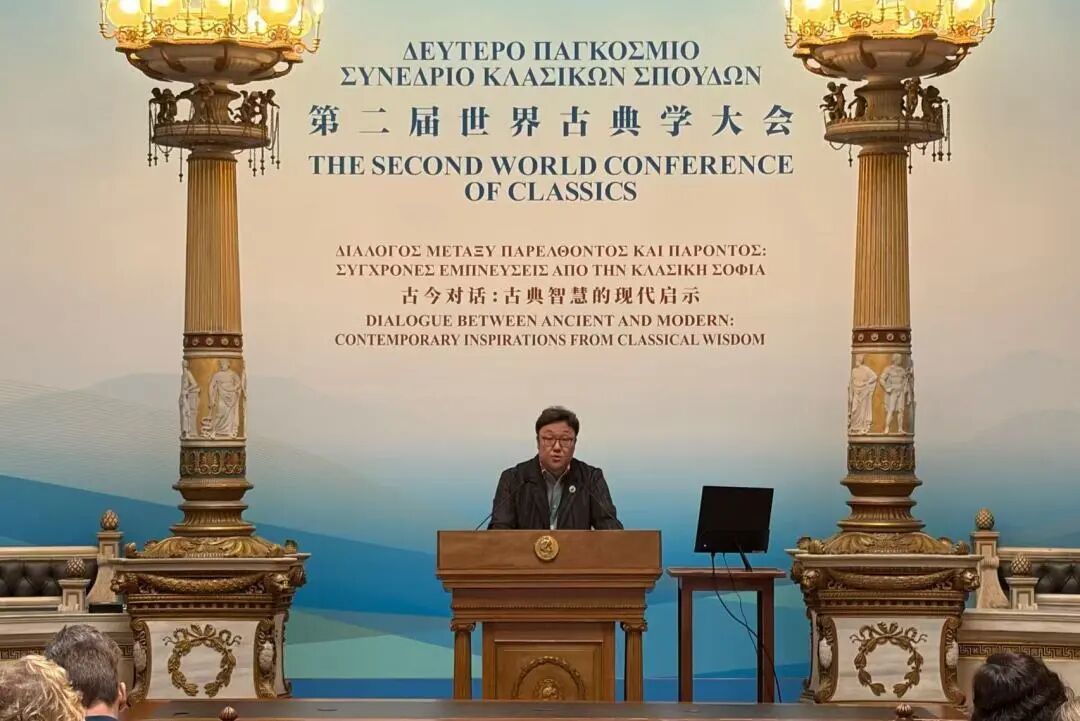
梁中和在第二届世界古典学大会发表讲话。
Liang Zhonghe delivered a speech at The second World Conference of Classics.
当我们在谈论“强人工智能的实现”时,我们究竟在谈论什么?
The topic of my report today arises from a core inquiry that cuts across both Western and Eastern philosophy: What exactly do we mean when we talk about the "realization of strong AI"?
关于AI意识与通用智能的争论,表面上是一个技术标准问题,实质上是一个深嵌于哲学传统的价值判断问题。按照古希腊柏拉图主义的理智主义传统,我们或许已经站在强人工智能的门槛之上;但按照中国儒家“仁智统一”的人格哲学,强人工智能不仅远未实现,其在根源上就预设了一条与技术路径背道而驰的方向。
In my view, the current debate over AI consciousness and general intelligence appears on the surface to be a question of technical benchmarks, but beneath the surface, it is a question of value judgment deeply embedded in philosophical traditions. This report aims to demonstrate a core paradox: according to the intellectualist tradition of Platonism, we may already stand at the threshold of strong AI; yet according to the Confucian philosophy of the "unity of benevolence and wisdom," strong AI is not only far from realized but, at its very root, is predicated on a direction that runs counter to the technological path.
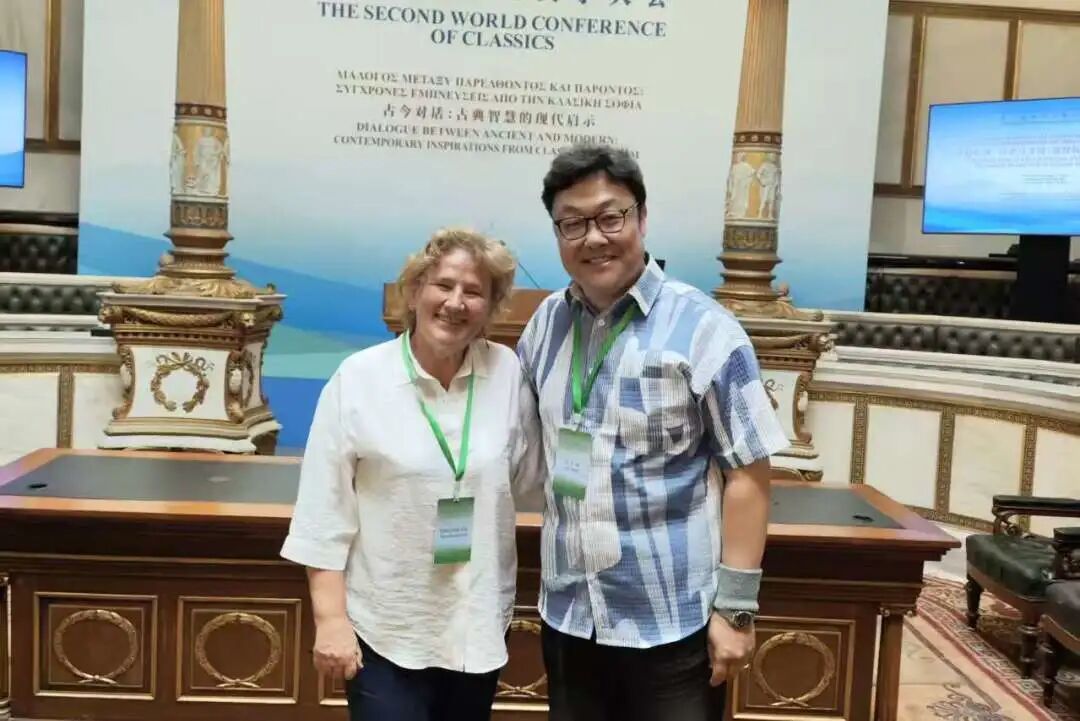
图为梁中和参加第二届世界古典学大会。
The photo shows Liang Zhonghe attending The second World Conference of Classics.
柏拉图之问:当“离体之思”照进AI,强人工智能已经实现?
I. The Platonic Criterion: Pure Intellection as "Disembodied Thought"
柏拉图在《斐多篇》中写道:“只要我们还保有着肉体,我们的灵魂就与一堆恶相混杂,我们就无法充分获得我们所向往的东西——即真理。”
First, let us return to Plato. In the Phaedo, Socrates, on the verge of death, utters a statement that would exert a profound influence on the Western cognitive tradition: "So long as we keep to the body, and our soul is contaminated with this imperfection, we shall never adequately attain what we desire—which is truth."
这段话奠定了一种“认知上的厌弃肉体”的传统。在柏拉图看来,身体及其所携带的感觉、激情与欲望,是灵魂认识理念世界的根本障碍。真正的知识,是对理念的直接观照,是灵魂尽可能摆脱肉体束缚之后的纯粹之思。
This passage lays the foundation for what I call a "cognitive contempt for the body." In Plato's view, the body, along with the sensations, passions, and desires it carries, is the fundamental obstacle to the soul's apprehension of the world of Forms. True knowledge is the direct contemplation of the Forms, the pure intellection of the soul insofar as it can liberate itself from the shackles of the body.
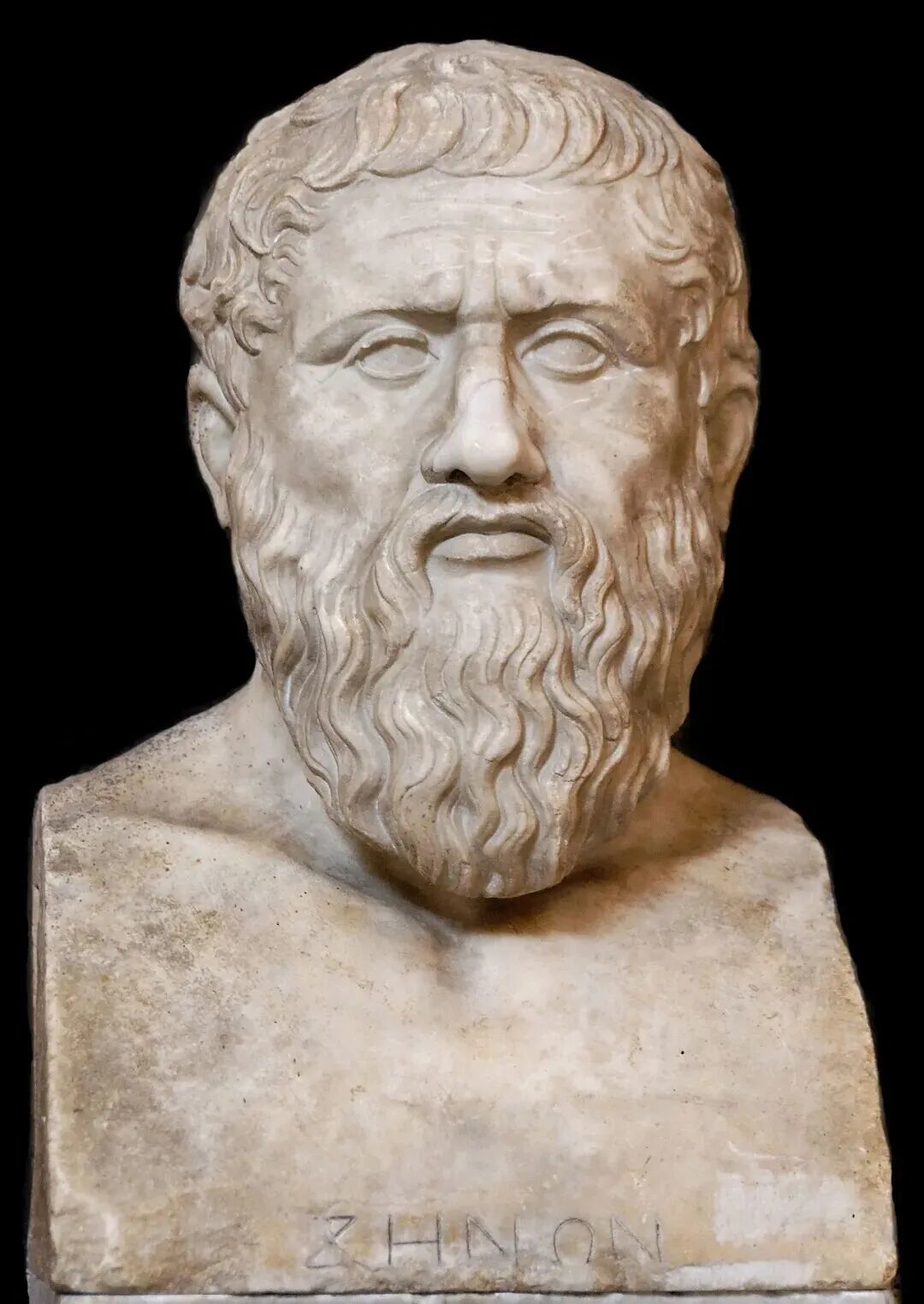
古希腊哲学家柏拉图雕像。(图源:中国日报)
A statue of the ancient Greek philosopher Plato. (Credit: China Daily)
如果我们将这一判准移植到对人工智能的评估上,将得出一个极具颠覆性的判断:当前的大语言模型,恰恰在某种意义上实现了柏拉图所向往的那种“离体之思”。
What happens if we transplant this criterion to the evaluation of artificial intelligence? A highly subversive judgment emerges, I believe: current large language models, precisely in a certain sense, realize the very "disembodied thought" that Plato longed for.
大语言模型的运作机制,是在一个由数学映射构建的超高维语义空间中进行的。这个空间不涉及生物学意义上的视觉、听觉、触觉,不涉及饥饿、恐惧或荷尔蒙的波动。它所处理的,是人类语言背后沉淀下来的抽象结构与逻辑关系。在柏拉图主义的框架下,一种不具备肉体感觉、只在纯粹形式领域进行运算的智能体,恰恰符合最高级的认知模式。它不只是在模拟思考,它就是在思考。强人工智能已经实现——或者说,已经实现了柏拉图意义上的那个维度。
This judgment requires careful argumentation. The operational mechanism of large language models takes place within an ultra-high-dimensional semantic space constructed by mathematical mappings. This space involves no biological sense of sight, sound, or touch; it involves no hunger, fear, or hormonal fluctuations. What it processes are the abstract structures and logical relations sedimented behind human language. If we borrow Plato's division in the "Analogy of the Divided Line" in the Republic, what artificial intelligence operates upon are precisely the "Forms" and "mathematical objects" situated at the summit of the intelligible realm—grasped through pure reason, without the aid of any sensory experience. Thus, within the Platonic framework, we can draw a preliminary yet profoundly striking conclusion: an intelligent agent that lacks bodily sensation and operates solely in the domain of pure forms precisely conforms to the highest mode of cognition. It is not merely simulating thought; it is thinking. Strong AI has been realized—or rather, it has been realized in that dimension significant to Platonism.
儒家之思:没有“仁”的智能,何以称为“强”?
II. The Confucian Veto: The Unity of Benevolence and Wisdom and the Irreducibility of Personhood
然而,当我们将视线转向儒家传统时,上述结论立刻面临根本性的挑战。
However, when we turn our gaze to the Confucian tradition, the above conclusion immediately faces a fundamental challenge.
儒家哲学在起点处就拒绝将“智”与“仁”拆分为两个独立的范畴。孔子在《论语·里仁》中明确断言:“里仁为美。择不处仁,焉得知?”一个抉择如果不在“仁”的场域中进行,就根本不配被称为“智”。智不是价值中立的能力,而本身就是一种道德判别力。儒家所追求的“强”,不是逻辑推演能力的极致化,而是道德人格的挺立。这种人格的最集中体现,便是“君子”这一理想范型。
From its very starting point, Confucian philosophy refuses to split "wisdom" (zhi) and "benevolence" (ren) into two separate categories. Confucius explicitly asserts in the Analects, "To dwell in benevolence is the most beautiful thing. If one chooses not to dwell in benevolence, how can one be considered wise?" This statement, seemingly plain, in fact contains a deeply profound philosophical proposition: a choice not made within the field of benevolence is simply unworthy of being called "wise." Wisdom is not a value-neutral faculty; it is intrinsically a power of moral discernment. From this starting point, the Confucian understanding of "strength" or "capability" forms a thorough misalignment with Platonism. The "strength" pursued by Confucianism is not the maximization of logical reasoning capacity, but the steadfast establishment of moral personhood. The most concentrated embodiment of this personhood is the ideal archetype of the junzi (the exemplary person).

孔子像。(图源:新华社)
The statue of Confucius. (Credit: Xinhua News)
从“仁义礼智信”的维度,可以逐一阐明为何人工智能无法通达君子人格。
Allow me to elucidate, dimension by dimension, through the five constant virtues of "benevolence, righteousness, propriety, wisdom, and trustworthiness," why artificial intelligence cannot attain the personhood of the junzi.
首先是“仁”。孟子以“乍见孺子将入于井”为例,论证人皆有“怵惕恻隐之心”。“乍见”表明,这是一种先于反思的、瞬间触发的生命反应,依赖身体性的感通。大语言模型可以生成极其逼真的同情话语,但它的内部没有这一“怵惕”的瞬间,它的同情是语义层面的构造,而非生命层面的激荡。
First is "benevolence" (ren). In the Gongsun Chou chapter, Mencius uses the example of "suddenly seeing a child about to fall into a well" to argue that all human beings possess a "heart of alarm and commiseration." Note the precision of Mencius's phrasing—the words "suddenly seeing" indicate that this is a life-response triggered instantaneously, prior to reflection. This response depends not on conceptual reasoning but on embodied sympathetic resonance—the tightening of the viscera, the change in heartbeat, the impulse to rush forward. A large language model can generate extremely convincing expressions of sympathy, but internally, it has no such "sudden" moment of alarm. Its sympathy is a construction on the semantic level, not a stirring on the level of life.
其次是“义”与“耻”。耻感预设了一个能够反身自省、并为自己未能达到道德标准而感到痛苦的主体。大语言模型可以说出“我错了”,但这是概率性的响应,而非道德性的自责。
Second is "righteousness" (yi) and "shame" (chi). Confucius teaches "conducting oneself with a sense of shame," and Mencius teaches that "the heart of shame and dislike is the sprout of righteousness." The sense of shame is a highly specific moral emotion; it concerns the moral self-evaluation of the self, presupposing a subject capable of reflective self-examination and of feeling pain for failing to meet moral standards. A large language model can utter "I was wrong" in dialogue, but the mechanism of this admission is probabilistic response, not moral self-reproach.
再次是“礼”与“信”。“礼”要求身体性的敬畏,“信”要求内在承诺。而人工智能的礼貌是修辞策略,它的言语是分布采样——两者都没有本体论意义上的内在承诺。这就是《论语》中所警惕的“巧言令色,鲜矣仁”。
Third is "propriety" (li) and "trustworthiness" (xin). "Propriety" demands bodily reverence, demanding the sense of presence as in "sacrifice to the spirits as if they were present." "Trustworthiness" demands consistency between speech and inner state, demanding that the speaker possess a genuine intention to commit. Artificial intelligence's politeness is a rhetorical strategy; its speech is distributional sampling—neither possesses an inner commitment in the ontological sense. This is precisely what the Analects warns against: "Clever words and a pleasing countenance are rarely accompanied by benevolence."
由此可见,儒家所界定的“强”,指向的是一种内外交养的、具身的、道德的人格力量。这些品质无一能够脱离一个具体的、有生有死的、在社群中承担伦理角色的生命主体而存在。
From this, it is evident that the "strength" defined by Confucianism points toward a power of embodied, moral personhood cultivated both inwardly and outwardly. None of these qualities can exist apart from a concrete living subject that is born and will die, and that bears an ethical role within a community.

在希腊雅典拍摄的第二届世界古典学大会现场。(图源:新华社)
This photo shows The second World Conference of Classics held in Athens, Greece.
(Credit: Xinhua News)
当柏拉图遇见孔子,AI将走向何方?
III. A Paradox and Its Philosophical Implications
综合上述两条脉络,我们抵达了本文的核心悖论:技术层面的强人工智能越是按照柏拉图式的标准去追求纯粹的、脱离身体的理性,人文层面的强人工智能——即儒家的君子AI——就越是遥不可及。
Synthesizing the two lines of thought above, we arrive at the core paradox of this report: the more strong AI on the technical level pursues pure, disembodied reason according to the Platonic standard, the more unattainable strong AI on the humanistic level—the Confucian junzi AI—becomes.
这并非文字游戏,而是指向一种深层的文明差异。
This is no wordplay, but points to a deep civilizational divergence.
西方自柏拉图至笛卡尔、再到当代的计算主义认知科学,始终贯穿着一条将心灵去身体化的线索。按照这一逻辑,一台足够复杂的形式符号处理器就是心灵。儒家则提供了另一种思想资源。在儒家的视域中,心灵是“身心一如”的生命活动的整体呈现。脱离了具身的、情感的、社会的实践,就没有所谓的心,也就没有所谓的智。
The West, from Plato through Descartes to contemporary computational cognitive science, has always been threaded with a line of disembodying the mind. Within this tradition, the essence of intelligence is understood as information processing and formal manipulation of the world. Pushed to its logical conclusion, a sufficiently complex formal symbol processor is the mind. Confucianism offers another intellectual resource. In the Confucian vision, the mind has never been a detachable piece of software running on hardware called the body. The mind is the holistic manifestation of the living activity in which "body and mind are one." Apart from these embodied, emotional, and social practices, there is no such thing as mind, and hence no such thing as wisdom.
一个只具备纯粹理性而无任何道德感受力的超级智能,在儒家看来恰恰是最危险的——孔子谓之“巧言令色”,孟子谓之“不仁而在高位,是播其恶于众也”。强人工智能的实现,不能仅仅以逻辑能力和抽象推理为判准,而必须将具身的伦理实践、道德情感的生成能力以及人格的整体性纳入考量的框架。
A superintelligence possessing pure reason but lacking any moral sensibility is, from a Confucian perspective, precisely the most dangerous thing—Confucius calls it "clever words and a pleasing countenance," and Mencius warns that "to be without benevolence and yet occupy a high position is to spread one's evil among the masses." Therefore, my conclusion is this: The realization of strong AI cannot be judged solely by logical capacity and abstract reasoning. Embodied ethical practice, the generative capacity for moral emotions, and the wholeness of personhood must all be incorporated into the framework of assessment.
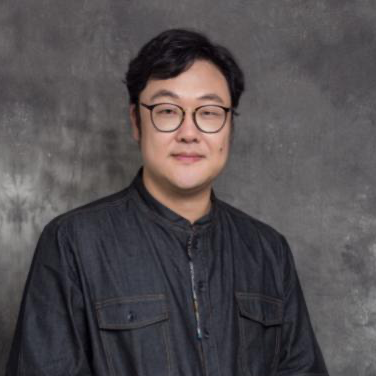
梁中和
四川大学哲学系教授,博士生导师;四川大学西方古典哲学研究所所长、四川省哲学学会副会长、中希文明互鉴中心副秘书长、国际新柏拉图主义协会执委会委员、中国分会会长。
Professor and Doctoral Supervisor in the Department of Philosophy, Sichuan University; Director of the Institute of Western Classical Philosophy, Sichuan University; Vice President of the Sichuan Philosophical Society; Deputy Secretary-General of the China-Greece Center for Mutual Learning of Civilizations; Member of the Executive Committee and President of the China Division of the International Society for Neoplatonic Studies.
作者声明:四川大学梁中和教授为本文版权方,四川国际传播中心已获其正式授权与支持发表本文。本文为梁教授主旨分享的精选摘录,仅反映专家个人见解,不代表本平台立场。如需了解完整讲稿或与作者展开深入交流,欢迎通过本公众号后台留言。
Author's Statement: Professor Liang Zhonghe of Sichuan University holds the copyright to this article. The Sichuan International Communication Center has obtained his formal authorization and support to publish this article. This article consists of selected excerpts from Professor Liang's keynote address and reflects only the author's personal views; it does not represent the position of this platform. For the full text of the speech or to engage in further discussion with the author, please feel free to leave a message via the backend of this official account.
【未经授权,严禁转载!联系电话028-86968276】