


















近期,韩国总统李在明的支持率一路暴涨,最新支持率已达67%,创下就任以来的最高水平。这一现象引发广泛关注。
Recently, South Korean President Lee Jae-myung’s approval rating has continued to soar, reaching 67%, the highest level since he took office.
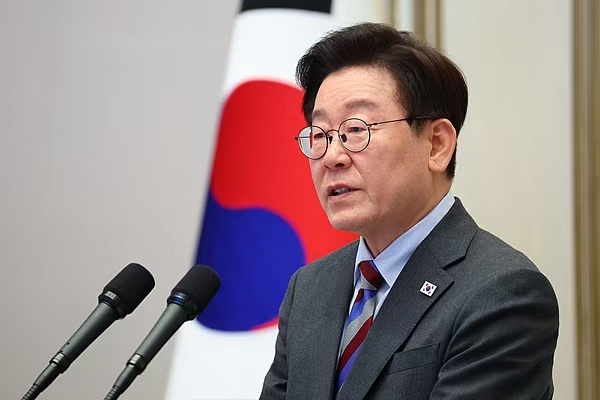
韩国总统李在明(资料图)
South Korean President Lee Jae-myung
(图源:央视新闻)
四川国际传播中心特邀首尔科学综合大学院大学黄菲教授,揭秘李在明支持率暴涨的背后原因,全文如下:
With this phenomenon attracting widespread attention, the Sichuan International Communication Center (SICC) has invited Huang Fei, an Assistant Professor at Seoul School of Integrated Sciences and Technologies (aSSIST), to shed light on the reasons behind Lee Jae-myung’s surging approval rating.
The main body is as follows:
根据韩国盖洛普发布的最新民调,韩国总统李在明施政支持率已达到67%,连续三周刷新执政以来的新高,并呈现出自2月以来的持续上升趋势。这一变化并非单一因素驱动,而是内政绩效、危机管理、政治结构以及外交策略等多重变量共同作用的结果。
According to the latest poll released by Gallup Korea, South Korean President Lee Jae-myung’s approval rating has reached 67%, marking a new record high since his inauguration. This figure has remained at the peak for three consecutive weeks and shows a steady upward trend since February. This shift is not attributable to a single factor. Instead, it results from the combined effect of multiple variables, including domestic governance, crisis management, political structure, and diplomatic strategy.
一、经济与民生是决定性因素
民调数据显示,韩国民众对李在明的积极评价中,“经济与民生”占比最高,约17%。这表明,当前支持率上升的最核心基础仍然是传统的内政绩效。
I.The Economy and People’s Livelihood Stand as Decisive Factors
According to the poll data, among South Koreans’ positive assessments of Lee Jae-myung, those related to “economy and people’s livelihood” accounted for the highest proportion, at around 17%. This indicates that the primary driver of his currently rising approval rating remains traditional domestic governance.
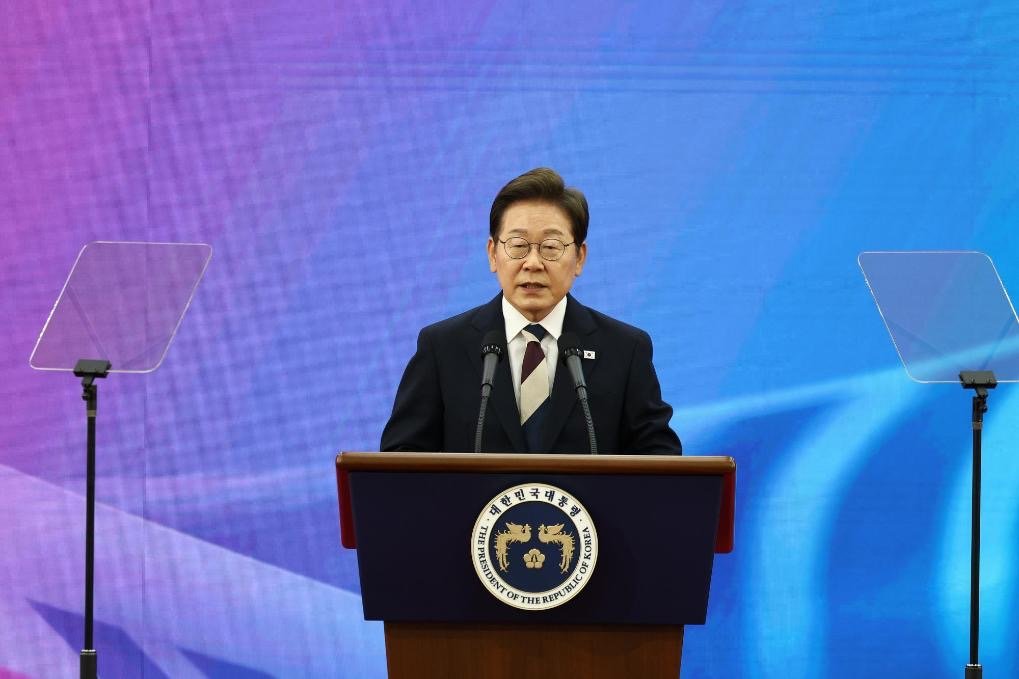
2025年6月4日,在韩国首尔,李在明在韩国国会发表就职讲话
On June 4, 2025, in Seoul, South Korea, Lee Jae-myung delivered his inaugural address at the National Assembly of South Korea
(图源:新华社)
一方面,在全球不确定性加剧,尤其是能源价格波动与外部需求疲软的压力下,韩国政府推出一系列包括价格调控、追加预算以及针对能源冲击的政策组合等应对措施,被公众视为“务实且有效”。尤其是政府对中东局势冲击的快速应对,显著提升了民众对其危机管理能力的认可。
On the one hand, amid growing global uncertainty, especially the pressures posed by fluctuating energy prices and weak external demand, the South Korean government has launched an array of countermeasures, including price controls, supplementary budgets, and comprehensive policy packages to address energy shocks. The public has widely regarded these measures as “pragmatic and effective”. In particular, the government’s quick response to the impact of the situation in the Middle East has significantly boosted public confidence in its crisis management capabilities.
另一方面,李在明一贯强调“以民生为导向”的政策风格,在经济压力期更容易争取到中间选民的支持,为其支持率提供了稳固基础。
On the other hand, due to his consistent emphasis on a policy approach focused on people’s livelihoods, Lee Jae-myung has been more effective at winning over swing voters during periods of economic hardship, thereby establishing a solid foundation for his approval rating.
二、危机应对与政治周期,形成放大效应
近期国际局势(尤其是中东冲突)带来的外部冲击,为韩国政府提供了一个“治理能力展示窗口”。通过快速推出政策工具、稳定市场预期,李在明政府在短期内树立了“有效政府”的形象。韩国民调中,“整体表现良好”和“沟通能力”的评价分别达到10%和约9%,说明公众不仅认可政策本身,也认可政府的执行与沟通方式。
II. Crisis Response and the Political Cycle Create an Amplification Effect
The external shocks caused by the recent international situation, particularly the conflict in the Middle East, have provided the South Korean government with an opportunity to showcase its governance capabilities. By rapidly deploying policy tools and stabilizing market expectations, the Lee Jae-myung administration has established itself as an “effective government” in a short period of time. In South Korean polls, evaluations of “good overall performance” and “communication skills” accounted for 10% and about 9%, respectively, indicating that the public recognizes both the policies themselves and the government’s implementation and communication methods.
换言之,这一轮支持率上升具有典型的“危机型上升”特征。这并非结构性长期趋势,而是对短期政策表现的集中反馈。
In other words, the rise in Lee’s approval rating exhibits the typical characteristics of a “crisis-driven surge”. It is not a structural, long-term trend, but a concentrated response to short-term policy performance.
与此同时,2026年6月地方选举临近,执政党正处于“政策蜜月期”与“选前窗口期”叠加的有利阶段。在野党相对弱势,政府也倾向于在选前集中释放一批“可感知”的政策成果。多重因素叠加,使得支持率的上升不仅反映了政策效果,也受到制度周期的放大。
Meanwhile, as local elections scheduled for June 2026 draw near, the ruling party finds itself in a favorable position where the “policy honeymoon period” and the “pre-election period” overlap. When the opposition party is relatively weak, the government also tends to roll out a batch of “tangible” policy achievements ahead of the local elections. Given this convergence of factors, the rise in the approval rating not only reflects the effectiveness of the policies, but is also amplified by the political cycle.
三、外交因素是稳定器,为内政“减压”
在民调中,“外交表现”仅占约9%的正面评价。这一数据揭示了一个关键结论:外交并非支持率上升的主导变量,但确实在边际上发挥了积极作用。
III. Foreign Policy Provides Stabilizing Effect, Easing Domestic Pressures
A public opinion poll shows that “foreign policy performance” accounts for only about 9% of positive evaluations, which points to a key conclusion: while foreign policy is not the primary driver of the rising approval rating, it still plays a positive role to some extent.
1. 对华关系:稳定预期的“经济变量”
在对华关系上,李在明长期主张“以国家利益为中心的均衡外交”,强调韩中合作的重要性。在韩国高度依赖对华贸易的背景下,稳定对华关系有助于缓解出口压力与供应链风险。对于普通选民而言,对华政策并不是意识形态议题,而是直接关联就业与经济稳定的“现实问题”。因此,任何有助于降低中韩关系波动的政策,都会在经济维度上间接转化为支持率提升。
1. Relations with China: An “economic variable” for stabilizing expectations
Regarding China and South Korean relations, Lee Jae-myung has long championed “balanced diplomacy that puts national interests first”, emphasizing the significance of cooperation between the two countries. Given South Korea’s heavy reliance on trade with China, stabilizing bilateral relations helps ease export pressures and mitigate supply chain risks. For ordinary voters, South Korea’s policy toward China is less about ideology and more a “practical concern” directly tied to employment and economic stability. Hence, any policy that promises to reduce volatility in China and South Korean relations will indirectly boost the president’s higher approval rating on the economic front.
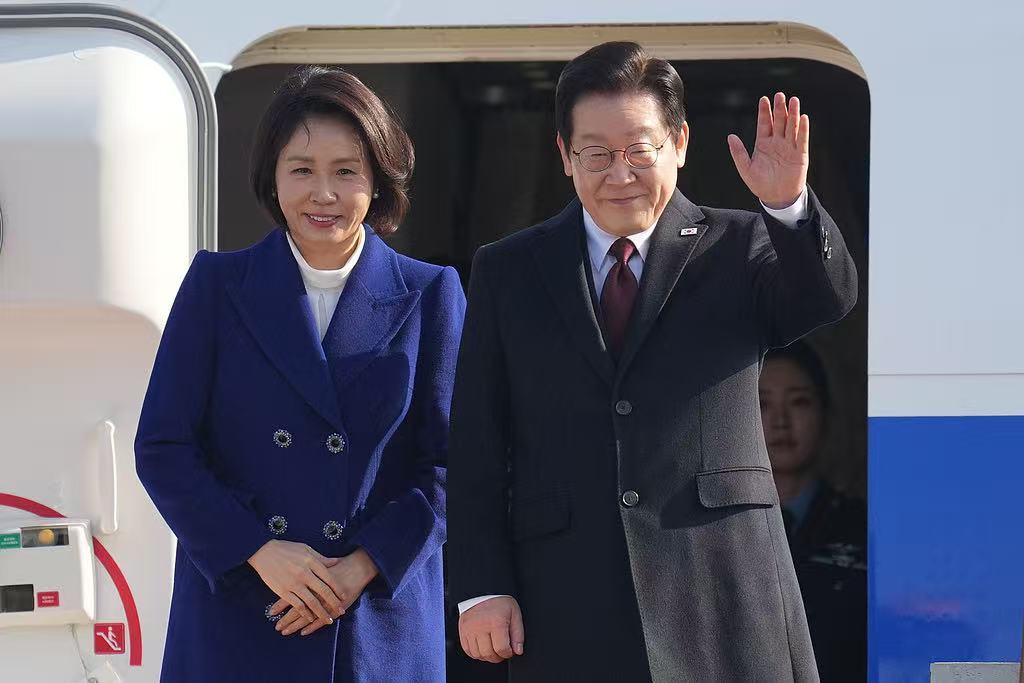
当地时间2026年1月4日 韩国总统李在明和夫人金惠景在首尔机场准备启程前往中国
South Korean President Lee Jae Myung and his wife Kim Hea Kyung are greeted before leaving for China at the Seoul airport in Seongnam, South Korea, Sunday, Jan. 4, 2026
(图源:总台环球资讯广播)
2. 对日关系:从对抗到务实的“风险管理”
李在明过去曾以强硬对日立场著称,但在其执政后,明显转向务实路线,将日本定位为“重要合作伙伴”,降低了历史问题对经济与安全合作的干扰。
2. Relations with Japan: A shift from confrontation to pragmatic “risk management”
Once known for his hard-line stance toward Japan, Lee Jae-myung has adopted a distinctly pragmatic approach since taking office. Furthermore, he regards Japan as a “key partner”, seeking to separate historical issues from economic and security cooperation.
在当前东北亚安全环境复杂化的背景下,韩日关系的稳定有助于强化区域安全框架,也减少了外交摩擦对国内政治的负面外溢。
With the Northeast Asian security environment growing increasingly complex, stability in South Korea-Japan relations would help bolster the regional security framework while preventing diplomatic tensions from spilling over into domestic politics.
综合来看,外交政策的主要作用并非制造亮点,而是降低外部不确定性、稳定经济预期、避免外交冲突转化为国内政治危机。它通过改善经济与安全环境,间接支撑了政府的支持率。
Overall, the main goal of foreign policy is not to generate headlines, but to reduce external uncertainty, stabilize economic expectations, and prevent diplomatic conflicts from escalating into domestic political crises. In doing so, foreign policy indirectly supports the government’s approval rating by improving the economic and security environment.
四、三重逻辑叠加,内政主导、外交辅助
从整体结构来看,李在明支持率突破60%、甚至达到67%的现象,可以理解为三层逻辑叠加:
核心层(决定性):经济与民生政策的实际效果;
中间层(放大器):危机应对能力与政治周期红利;
外层(稳定器):对华、对日等外交关系的稳健调整。
因此,外交虽不是“至关重要”的决定性角色,但确实是一个不可忽视的“支撑性因素”。
IV. Triple Logic Overlay: Domestic Politics as the Dominant Factor and Diplomacy as a Supporting Element
From an overall structural perspective, Lee Jae-myung’s approval rating surpassing 60% and even hitting 67% can be understood as the overlay of three layers of logic:
Core layer (decisive factor): Practical effects of his economic and livelihood policies;
Middle layer (amplifier): Crisis response capability and dividends from the political cycle;
Outer layer (stabilizer): Prudent adjustments in diplomatic relations with China, Japan, and other countries.
Therefore, though foreign policy cannot be regarded as a “decisive” factor, it is indeed an essential “supporting element”.
李在明当前的高支持率,本质上是韩国选民对“有效治理”的一次集中回应。在全球不确定性上升的背景下,民众更倾向于支持能够稳定经济、有效应对危机的政府。
Lee Jae-myung’s current high approval rating is actually a concentrated response from South Korean voters to “effective governance.” In the context of rising global uncertainty, the public tends to support a government capable of stabilizing economy and tackling crises effectively.
未来,随着地方选举临近以及外部环境变化,这一高支持率能否持续,将取决于短期政策红利能否转化为长期结构性成果。
Looking ahead, as the local elections approach and the external environment changes, this high approval rating’s consistency depends on whether short-term policy dividends can be transformed into long-term structural fruits.

黄菲
首尔科学综合大学院大学(aSSIST)国际课程主任教授、中文MBA/PhD项目总管主任教授。主要研究领域为企业战略、国际商务、品牌管理及可持续发展管理。黄菲教授在韩国KBS国际台、TBS交通广播等主流媒体长期担任中文广播嘉宾主持,对中韩关系、韩国政治经济及东北亚区域议题有深入观察与独到见解。
Huang Fei
Assistant Professor of international programs at Seoul School of Integrated Sciences and Technologies (aSSIST) and Director & Assistant Professor of aSSIST’s Chinese-language MBA/Ph.D. programs. Prof. Huang’s main research areas include corporate strategy, international business, brand management, and sustainability management. She has long served as a guest commentator for Chinese-language broadcasts on major South Korean media outlets such as KBS World Radio and Traffic Broadcasting System (TBS). Prof. Huang possesses profound understanding and insightful views on China-South Korea relations, South Korean politics and economy, and Northeast Asian issues.
已获得本文转载及翻译授权
Reproduction and translation rights have been obtained.
【未经授权,严禁转载!联系电话028-86968276】