


















Hu Sen: Navigating through perilous waters and pressing forward with courage
文:《一带一路报道》全媒体记者 雷怡安

“二院、海外、朋友、人生,必有奋斗、执着、选择与真诚。”对扈森的访谈,就从他的这一诗句,以及“二院”和“海外”开始。
海外,是中铁二院工程集团有限责任公司(以下简称“二院”)数代人不懈追求的梦想。早在20世纪60年代,二院就开启了海外探索之路,是国内首批出海的国际企业。2002年后二院重启海外征程,紧抓“一带一路”倡议的历史契机,10年间,承担了海外70多个国家和地区的300余项工程项目,累计推动签订合同150亿美元。
作为新世纪从零起步、最早出海的一批二院人,扈森在13年的海外生涯中,带领二院海外团队开拓了委内瑞拉、孟加拉国、埃塞俄比亚、俄罗斯等海外市场,足迹遍布全球。伴随着中铁二院的蓬勃发展,他自身也完成了从一名开拓者到中铁二院党委书记的自我挑战与成长。在扈森娓娓道来的海外故事中,有梦想有激情,有苦涩有逆境,还有执着和坚毅,也让我们从中窥见中国铁路建设者们在海外拼搏的酸甜苦辣和赤子之情。

时任副总经理的扈森在委铁项目部驻地
走向世界的另一端
“2006年的某一天,一群年轻人来到地球的另一端……”伴随着回忆,扈森仿佛重新回到了那个在未知的海外创业的时代。
委内瑞拉位于南美洲北部,自然、矿产资源极其丰富,在2005年以前,那里仍是中国铁路建设者很难踏足的土地。2006年已是中铁二院副院长的扈森,作为海外项目牵头人和前方工作组的组长,带领着一群年轻人远渡重洋,踏上委内瑞拉的热土开拓铁路项目。
“都是第一次去海外做项目,他们也不了解海外情况,我必须‘撑住’!”扈森笑着说。委内瑞拉当地的情况比想象中还糟糕。社会治安和卫生环境这样最基本的条件都让第一次去的中国人很难适应,再加上人手有限,每一个人工作量倍增。
“由于对市场不熟悉、对业主不了解,一开始我们就闹了不少笑话。”扈森说,“业主不接收英文文件,由于西语人才缺乏,一箱箱技术文件被翻译成西语后,以西语为母语的业主却完全看不懂,我们提交的西语文件被通知拉回去,这简直让我们无地自容。”
这一次的波折,也让第一次“出海”的年轻团队看到了自己的不足,充分认识到海外项目的困难与挑战,并迅速进入工作状态。
然而,背后付出再多努力也架不住外部情况一变再变。“我在委内瑞拉待了4年,4年里换了两任交通部部长,三任铁路局局长,很多好不容易建立起来的联系,又瞬间被打回原形。”言于此,扈森无奈地笑了笑。面对此种情况,扈森也只能给大家精神鼓励——坚持就是胜利。
扈森说:“在委内瑞拉的那几年,我们所有人都身兼数职。比如像我,该领导出面的时候,我就当领导;该钻研技术的时候,我就当技术员;该做服务工作,我就当服务员;该搞经营时,我又是业务员。”于是,白天,大家一身正装出去与当地官员接洽联络;到了晚上,大家就撸起袖子,挑灯夜战写方案、搞技术。
历经4年的艰苦努力和精心孕育,在各方的大力支持下,团队终于在2009年迎来期盼已久的大丰收。中铁二院海外团队推动中国中铁一举揽获合同金额75亿美元的委内瑞拉北部平原铁路项目,创造了当时中国国际工程铁路EPC总承包合同额的历史最高纪录!
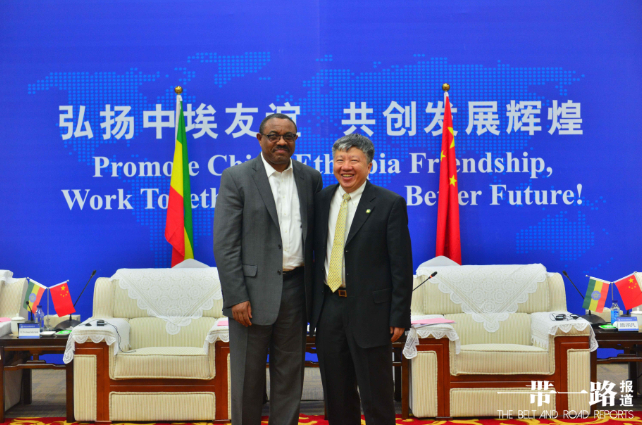
2017年5月20日,扈森与埃塞俄比亚时任总理海尔马里亚姆在中铁二院总部合影
让“中国标准”扎根海外
2017年5月20日,埃塞俄比亚总理海尔马里亚姆莅临中铁二院总部亲手种下了一棵象征着中埃友谊的金桂树。他亲切地将中铁二院人唤做“老友”和“家人”,称赞二院人“不仅授人以鱼,而且授人以渔”,并亲笔题词:“亚吉铁路是现代科技在非洲的应用,它已经成为中非合作的硕果、‘一带一路’和国际合作的示范工程,并且提升了中埃本就友好的关系。”
然而,“硕果”来之不易。
在广袤的东非高原上,地处内陆的埃塞俄比亚苦于交通条件闭塞,具有强烈的铁路建设需求。2009年,扈森率队进军东非市场。通过高端经营、强强联合、持续深耕,前后花了7年时间,成功让列车沿着两条“中国标准”的铁路,飞驰在了“非洲屋脊”上。一条是海尔马里亚姆盛赞的亚吉铁路,是中国企业在海外建设的首条全产业链中资电气化铁路;另一条是穿梭于埃塞俄比亚首都亚的斯亚贝巴的东非第一条城市轻轨。
进军海外市场,有许多挑战,技术壁垒就是其中一个。谈到如何让“中国标准”落地海外,扈森感慨道:“比第一次出海更难,简直是波折不断!”“欧标”“英标”在埃塞俄比亚传播多年。如何在最短时间内,让埃方认可和接受中国标准、信赖中铁二院,于扈森团队来说,是必须征服的重大挑战。
凭着“明知山有虎、偏向虎山行”的闯劲儿,团队以真诚的沟通、过硬的专业知识以及以客户为先的设计理念,逐步在当地树立起了“中国标准”的品牌形象,逐渐赢得埃塞业主方的认可,最终与中铁二院签订了前期的勘察设计合同。
然而,就在2010年,埃塞国内出现了不同声音,反对党指责执政党政府选择中国公司另有所图,质疑甚嚣尘上,埃塞业主方也顿感压力、顾虑重重。为了彻底打消埃塞业主方顾虑,更为了中国企业的荣誉,团队将拟修建的铁路做成三维动画视频。“视频不仅要做好,体现水平,还要加入埃塞当地元素,通俗、直观、易懂。”为了“关键一战”,扈森带头加班加点,“对不满意的各种细节,全都进行了修改!”直到熬出第三个版本的三维动画视频,所有人才敢松一口气。
视频提交给埃塞业主方总经理后,他激动得跳了起来,连声说:“太棒了!”时任埃塞总理梅莱斯看到视频后,也是赞不绝口,特召开记者招待会,遍请埃塞各界名流,并在会场滚动播放视频,再经新闻媒体投放全国。这部介绍中国设计方案的三维动画视频,伴随埃塞国歌,每晚在埃塞新闻联播前一连播放了三个月。一点一点向前延伸的铁轨,穿越群山和荒原的隧道桥梁,闪耀着一个又一个城市名字的车站,这条将要修建的铁路,如同视之能见、触之能及的奇迹,让整个埃塞沸腾了。了不起的“中国标准”,走进了埃塞百姓的心中。
艰苦的谈判结束后,业主立即要求在三个月内开工,具体的挑战更是一个接着一个。二院团队很快定下了“在局部方案稳定、不复杂的地段率先开工”的施工方案,极大加快了整个项目的实施进程。在项目实施中,二院所力推的中国标准被成功采用,有效带动了国内全产业链出海,而这正是二院人所时刻没有忘记的重要使命:推动中国标准走向世界,送去希望、传播技术、收获友谊、推动繁荣。
如今,亚吉铁路和埃塞轻轨已为当地旅客出行和货物运输提供了极大便利,更有力提升了中埃两国在经济、贸易、文化各方面的合作。“铁路已经成为内陆国埃塞俄比亚的经济生命线。”埃塞俄比亚交通物流部部长高度评价道。
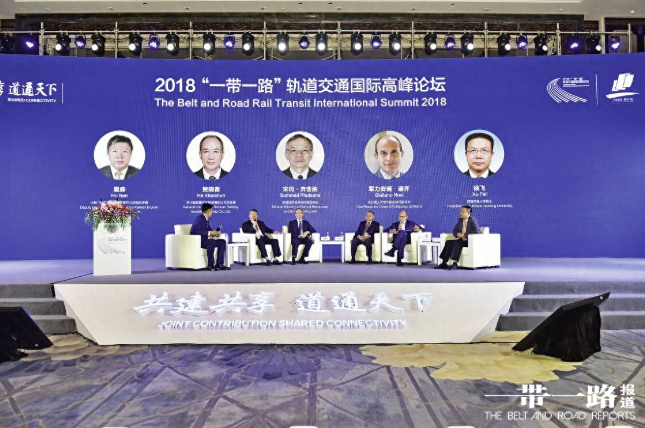
扈森出席2018“一带一路”轨道交通国际高峰论坛
广交朋友共创未来
扈森常说:“谋铁路就是谋发展、谋规划就是谋未来。”2013年,“一带一路”倡议提出后,扈森提前谋划、带领团队开展了数十项中国“走出去”和“一带一路”交通基础设施专题研究,并主动进行了大量的国别交通路网规划,已累计完成了四纵六横非洲通道规划、南美两洋铁路通道战略布局等4项洲际规划、20项跨国规划和50余个国别规划,奠定了二院作为国家层面“走出去”的央企智库职能,为后来孵化、创造、主导和参与政府间重点项目奠定了坚实基础。
迄今为止,二院规划创造出众多重要项目落地。在缅甸,两国领导人亲自见证二院编制的中缅铁路可研报告递交缅方;在孟加拉国,获得该国投资额最大的基建项目帕德玛大桥铁路连接线工程;在老挝,建成了被习近平主席誉为“一带一路”、中老友谊标志性工程的中老铁路……二院铸造的精品工程已遍布全球,成为中国践行“一带一路”倡议的交通基建主力军。
在拓展海外业务的同时,扈森也在不断思考如何让更多的国家认同中国标准、了解中国文化。在他的大力推动和亲自参与下,二院系统收集、翻译和整理了欧洲标准、日本规范和俄罗斯标准等相关资料1000余册,编撰完成了《俄汉铁路综合词典》等9种语种13本铁路常用词典,开办了70余期国际官员研修班,为全球100多个国家和地区的2100余名官员提供专业培训,培养了大批的中国“粉丝”,极大推动了“一带一路”倡议在世界各地落地生根。
“海外项目不是短时间能出成绩的,需要扎根当地,恪尽职守。很多时候,一年、两年、三年都看不到一点成绩。”当问及是什么让扈森坚定地选择13年如一日地开拓海外市场时,他告诉记者,“大概是对海外事业的热爱之情可抵万难吧,虽然面临各种艰难险阻,但我都没有放弃,坚持下来了。下一个10年,我希望中铁二院以及更多的中国企业都继续沿着‘一带一路’铺就的大道,勇往直前。”
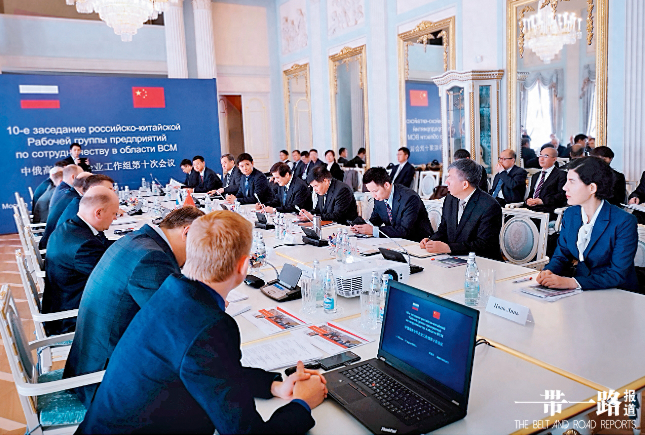
2019年扈森出席中俄高铁合作工作组会议
“CREEC, going global, friends, and life, with struggle, persistence, choices, and sincerity.” In the interview with Hu Sen, we started with this poetic line created by him, with focus on “CREEC” and “going global.”
Going global is a dream relentlessly pursued by generations of people at China Railway Eryuan Engineering Group Co., Ltd. (CREEC). As early as the 1960s, CREEC started its overseas exploration and became one of the first international enterprises in China to go global. After 2002, CREEC resumed its overseas journey, seizing the historic opportunity presented by the Belt and Road Initiative (BRI). Over the course of a decade, it undertook more than 300 engineering projects in over 70 countries and regions worldwide, contributing to a cumulative contract value of 15 billion U.S. dollars.
As one of the pioneers from CREEC who started from scratch and embarked on the overseas journey at the beginning of the new century, Hu Sen, during his 13-year international career, led CREEC’s overseas team in exploring markets in Venezuela, Bangladesh, Ethiopia, Russia, and various other overseas destinations, leaving their footprints across the globe. Alongside the thriving development of CREEC, Hu Sen underwent a role transformation from a pioneer to the Party Secretary of the company, challenging himself continuously and experiencing great personal growth. In Hu Sen’s vividly recounted overseas stories, we find dreams and passion, moments of bitterness and adversity, as well as unwavering determination and resilience. Through these narratives, we catch a glimpse of the bittersweet experiences and unwavering commitment of Chinese railway builders in their striving overseas.
Venturing to the other side of the world
“One day in 2006, a group of young people arrived at the other end of the Earth.” With the memories flooding back, Hu Sen seemed to transport himself back to that era of pioneering overseas ventures into the unknown.
Venezuela, located in the northern part of South America, boasts abundant natural and mineral resources. Prior to 2005, it was a challenging land for Chinese railway builders to set foot on. In 2006, Hu Sen, already serving as the Vice President of CREEC, led overseas projects and headed the advance team. He led a group of young individuals on a transoceanic journey to embark on the development of railway projects in the fertile land of Venezuela.
“It was the first time for everyone work on an overseas project, and nobody was familiar with the circumstances there, so I had to stay strong,” Hu Sen said with a smile. The local situation in Venezuela turned out to be even more challenging than they had imagined. The basic conditions, such as social order and the sanitary environment, were difficult for the first-time Chinese workers to adapt to. Moreover, with limited manpower, the workload for each person doubled.
“Due to our unfamiliarity with the market and lack of understanding of the client’s preferences, we had quite a few mishaps from the very beginning,” Hu Sen explained, “The client wouldn’t accept documents in English. Due to a shortage of Spanish-speaking personnel, we struggled to translate boxes of technical documents into Spanish. However, the client, a native Spanish speaker, couldn’t understand them at all and rejected them, which was quite embarrassing.”
This setback made the young team going abroad for the first time realize their shortcomings and fully appreciate the difficulties and challenges of overseas projects, so they whipped themselves into "work mode" promptly.
However, no matter how much effort they put in, they couldn’t overcome the constantly changing external circumstances. “I stayed in Venezuela for four years, but I met two new ministers of transportation and three new directors of the railway bureau. As a result, many hard-earned connections were rendered useless,” Hu Sen said with a resigned smile. Faced with such circumstances, Hu Sen could only offer words of encouragement to the team members: Persistence leads to victory.
With strong support from various quarters, the team finally reaped the long-awaited bountiful harvest in 2009 after four years of arduous efforts and careful nurturing. CREEC’s overseas team played a pivotal role in securing the railway project in the northern plains of Venezuela, with a contract worth 7.5 billion U.S. dollars. This achievement set a historic record for the highest value of an EPC (engineering, procurement, and construction) contract awarded to a Chinese international railway project at the time!
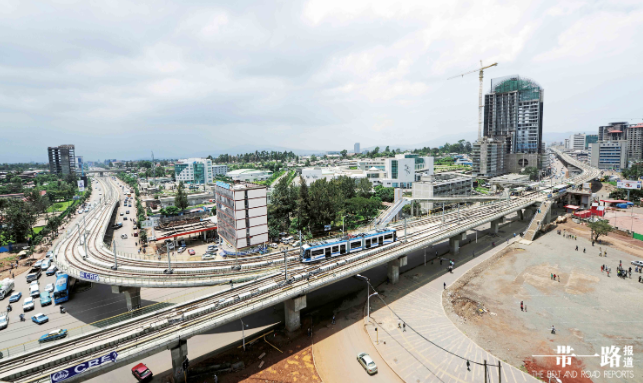
亚的斯亚贝巴轻轨
Deeply implementing Chinese standards overseas
Located in the vast East African Plateau, the landlocked Ethiopia faced significant challenges due to its limited transportation infrastructure, highlighting the pressing need for railway development. In 2009, Hu Sen led a team to enter the East African market. After seven years of dedicated efforts, employing high-end operations, strategic partnerships, and continuous commitment, they succeeded in getting trains to speed along two railways built with Chinese standards on the “Roof of Africa”. Of the two railways, the Addis Ababa-Djibouti Railway, highly praised by Prime Minister Hailemariam, is the first electrified railway completely constructed during the whole industrial chain by a Chinese company overseas; the other one is East Africa’s first urban light rail that runs through Addis Ababa, capital of Ethiopia.
Venturing into overseas markets poses numerous challenges, and overcoming technological barriers is one of them. When discussing how to implement Chinese standards overseas, Hu Sen expressed his sentiment, saying, “It was even more difficult than our first going global exploration, riddled with constant challenges.” European standards and British standards had been prevalent in Ethiopia for many years. For Hu Sen and his team, the crucial challenge was to gain the Ethiopian side’s recognition and acceptance of Chinese standards and to earn its trust in CREEC within the shortest possible timeframe.
With a fearless spirit, the team gradually established the brand image of Chinese standards in the local community through sincere communication and by virtue of strong professional knowledge and a customer-centric design philosophy. Over time, they earned the recognition of the Ethiopian client, leading to the signing of preliminary survey and design contracts with CREEC.
However, in 2010, internal dissent emerged in Ethiopia, with the opposition party accusing the ruling government of having ulterior motives in choosing Chinese companies and raising serious doubts. This situation created significant pressure and concerns for the Ethiopian client. In order to completely alleviate the concerns of the Ethiopian client and uphold the honor of Chinese companies, the team created a three-dimensional animated video illustrating the proposed railway construction. “The video not only had to be well executed and demonstrate our expertise, but it also needed to incorporate local Ethiopian elements, making it easily comprehensible and relatable,” said Hu Sen. In their pivotal effort, Hu Sen took the lead by working overtime, tirelessly making revisions to every detail until they finally produced the third version of the three-dimensional animated video that everyone was satisfied with, allowing them to breathe a sigh of relief.
After receiving the video, the general manager of the Ethiopian side jumped up and exclaimed excitedly, “This is amazing!” When Meles Zenawi, then-Ethiopian Prime Minister, watched the video, he was also full of praise. He promptly held a press conference, inviting prominent figures from various sectors in Ethiopia and showcasing the video on the venue’s big screen. The video was further disseminated throughout the country via news media channels. This three-dimensional animated video presenting the Chinese design solution played for three consecutive months every evening before the Ethiopian national news, accompanied by the Ethiopian national anthem. The remarkable Chinese standards found the way into the hearts of the Ethiopian people.
After arduous negotiations, the client promptly requested the start of construction within three months, and challenges came one after another. CREEC’s team quickly decided to “initiate work in areas with stable and uncomplicated schemes,” significantly accelerating the overall project implementation process. During the implementation of the project, the Chinese standards advocated by CREEC were successfully adopted, effectively driving the complete domestic industry chain to go global. It reflects the crucial mission that the people of CREEC never forgot: to promote Chinese standards worldwide, deliver hope, spread technology, foster friendship, and contribute to prosperity.
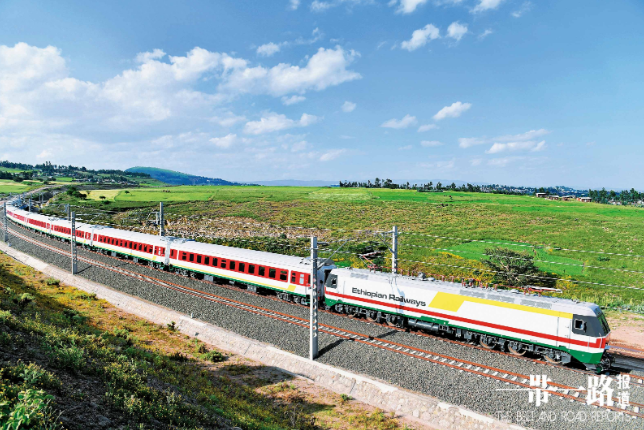
亚吉铁路
Making more friends to create a shared future
Hu Sen often said, “Railway planning is synonymous with development planning, and strategic planning is our path to the future.” In 2013, following the introduction of the BRI, Hu Sen proactively initiated and led dozens of research projects related to China’s “going global” strategy and transportation infrastructure development under the BRI framework. He actively engaged in country-specific transportation network planning. As a result, his team completed a total of four transcontinental plans, including the planning of the African corridors with four north-south routes and six east-west routes and the strategic layout of the Twin Ocean Railroad Connection project in South America, as well as 20 multinational plans and over 50 country-specific plans. This laid the foundation for CREEC’s role as a centrally-administered state-owned think tank for China’s outbound initiatives and provided a solid basis for the subsequent incubation, creation, leadership, and participation in key intergovernmental projects.
So far, CREEC has successfully planned and implemented numerous significant projects. In Myanmar, leaders of both countries witnessed the submission of the feasibility study report for the China-Myanmar railway, prepared by CREEC. In Bangladesh, the company secured the largest investment in infrastructure, the Padma Bridge and Rail Link projects. In Laos, they completed the China-Laos railway, which President Xi Jinping praised as a landmark BRI project and a symbol of China-Laos friendship. The outstanding projects undertaken by CREEC have covered the globe, solidifying its position as a key player in China’s efforts to implement the BRI in the field of transportation infrastructure.
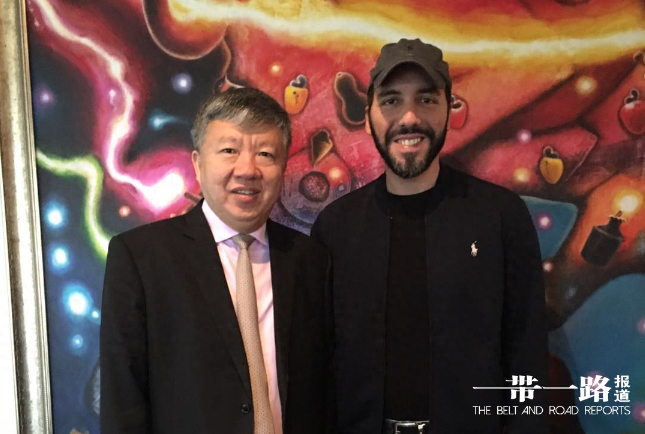
2019年5月,扈森与萨尔瓦多总统纳伊布·布克尔合影
“Overseas projects don’t yield results quickly. We need to make long-term efforts in the local community and fulfill our responsibilities diligently. In many cases, we don’t see any results in a year, two years, or even three years.” When asked what kept him steadfast in exploring overseas markets for 13 years, Hu Sen told the reporter, “It’s probably the passion for overseas endeavors that can overcome all obstacles. Despite various challenges and hardships, I never gave up, and I persevered. In the next ten years, I hope CREEC and many more Chinese companies will continue to forge ahead along the path paved by the BRI.”
来源:《一带一路报道(中英文)》2023年10月特刊
【未经授权,严禁转载!联系电话028-86968276】